- The U.S. Treasury issued $25.4 trillion in T-Bills as short-term debt.
- Record short-term debt raises interest rate sensitivity.
- Market responds with heightened concerns over fiscal sustainability.
The U.S. Treasury issued a record $25.4 trillion in T-Bills over the past year, comprising 69.4% of total U.S. debt issuance, reported The Kobeissi Letter.
This shift increases U.S. debt sensitivity to interest rate changes, potentially impacting fiscal stability and the macroeconomic environment significantly.
US Treasury Short-Term Debt Strategy Raises Alarm
The Treasury’s issuance of $25.4 trillion in T-Bills over the past year reflects a strategic shift towards short-term debt financing. This strategy puts future fiscal planning at risk, as dependence on short-term debt increases vulnerability to interest rate changes.
The reliance on short-term debt places U.S. fiscal policy in a precarious position, heightening the government’s interest rate sensitivity. If Federal Reserve policy rates rise, interest expenses could soar significantly, impacting fiscal sustainability. Prominent figures have reacted to this debt strategy. Arthur Hayes emphasizes Bitcoin’s potential as a hedge against fiscal instability, while Raoul Pal likens the situation to an emerging market fiscal crisis.
Crypto Assets Gain Attention Amid Fiscal Concerns
Did you know? The current reliance on T-Bills echoes similar spikes seen briefly during financial crises, such as the COVID-19 pandemic in 2020 and the 2023 banking crisis, when the dependency on short-term debt raised systemic risk concerns.
Based on data from CoinMarketCap, Bitcoin’s current price is $89,920.81, with a market cap of $1.79 trillion. It holds a market dominance of 58.53%, with a 24-hour trading volume of $57.22 billion. Bitcoin’s price decreased 1.57% in the last day and saw an 11.75% decline over 30 days, revealing a bearish trend.
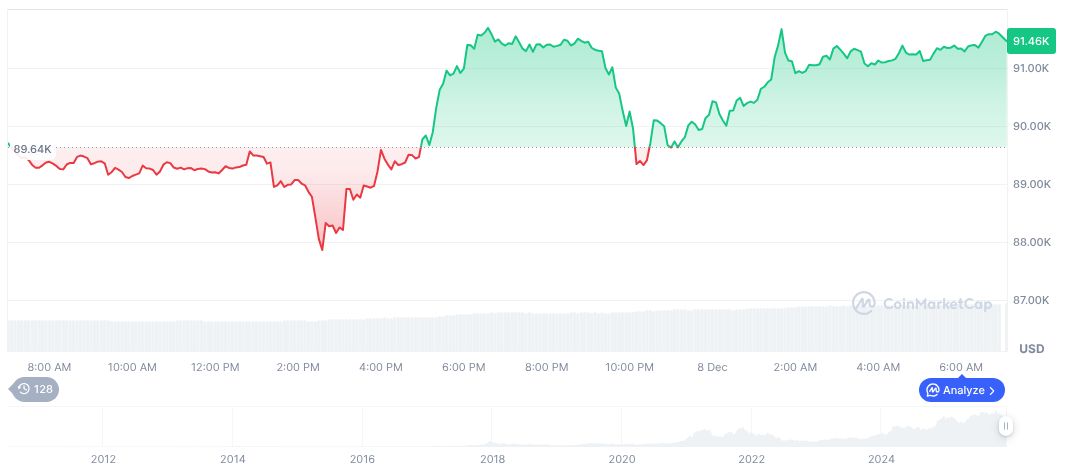
The Coincu research team highlights potential regulatory scrutiny on U.S. debt concentration in short-term instruments, predicting increased interest in crypto assets as a hedge against foreseeable monetary fluctuations. Crypto’s growing role in financial stability discussions emerged from both market behavior and institutional sentiments.
| DISCLAIMER: The information on this website is provided as general market commentary and does not constitute investment advice. We encourage you to do your own research before investing. |
Source: https://coincu.com/analysis/record-treasury-debt-short-term-risks/