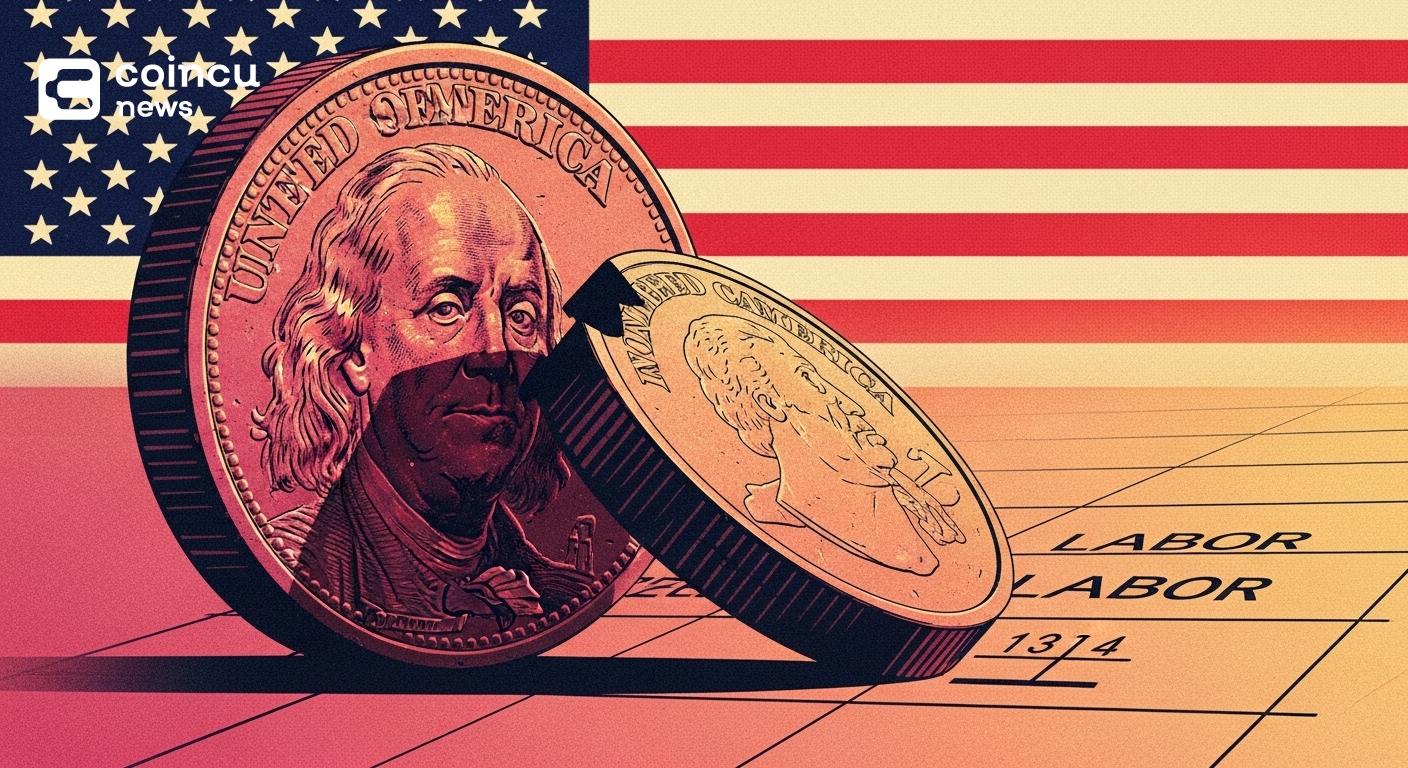

The dollar’s decade-long rally may reverse as U.S. exceptionalism fades
The U.S. dollar’s extended outperformance is confronting a turning point as the story of U.S. exceptionalism loses momentum. A familiar tailwind, positive Non-Farm Payrolls (NFP), may increasingly deliver mixed or even negative FX outcomes.
according to goldman sachs FX analysts, the pillars of exceptionalism are under pressure as tariffs threaten corporate margins and real incomes, while valuation gauges such as the real effective exchange rate and DEER imply scope for depreciation.
What turns strong Non-Farm Payrolls (NFP) into a dollar-negative signal
Historically, an NFP beat lifted Treasury yields and the dollar by pushing out rate-cut expectations. That transmission is weaker when investors prioritize the policy path’s sustainability, macro balance, and starting valuations over single data surprises.
When the dollar screens overvalued and ownership is heavy, a strong NFP can tighten financial conditions, undermine risk appetite, and catalyze deleveraging or hedging flows that offset, or even reverse, knee‑jerk dollar gains.
Aggregate payroll strength can also mask uneven cooling across industries, weakening the headline’s signaling power. In such regimes, markets may fade data beats if they worsen the balance between growth, inflation, and policy risk.
According to MUFG Research, an undershoot in U.S. non-farm payrolls could trigger further dollar depreciation by accelerating expectations for federal reserve rate cuts and narrowing rate differentials that previously supported the currency.
Policymakers have signaled sensitivity to labor dynamics as well. After noting signs of fragility, one official characterized the labor market as “less dynamic,” said Michelle Bowman, Federal Reserve Governor. That nuance matters when translating jobs data into the policy outlook and FX.
Valuation and flow considerations remain central. If REER/DEER measures imply an overvalued dollar, even modest shifts in rate expectations or global allocations away from U.S. assets could compound cyclical pressures.
At the time of this writing, Apple Inc. traded near 261.45 USD in the overnight session (+0.33%), and Bitcoin hovered around 67,221 USD with “Bearish” sentiment and 11.83% volatility, providing neutral market context.
FAQ about Non-Farm Payrolls (NFP)
How could a strong NFP print weaken the dollar instead of strengthening it?
When valuations are stretched and financial conditions tighten, a strong NFP can delay rate cuts, dent risk appetite, and trigger hedging or de-risking. Those flows can outweigh yield effects and pressure the dollar.
What valuation metrics (REER, DEER) indicate the dollar is overvalued right now?
REER gauges the inflation-adjusted trade-weighted value of the currency. DEER estimates a dynamic equilibrium exchange rate. If both sit above fair value ranges, analysts infer depreciation scope over a multi-quarter horizon.
Monitoring checklist: NFP breadth, wage growth, unemployment, expected Fed cuts, REER/DEER, and foreign portfolio flows. Shifts across these gauges may confirm a turn in the dollar cycle.
Scenario risk: persistent strong NFP delays cuts, tightens financial conditions, dents risk appetite, and can ultimately weigh on the overvalued dollar via deleveraging and hedging flows.
Alternative risk: soft NFP accelerates rate-cut pricing, narrows U.S. rate differentials, and prompts reallocation from USD assets, reinforcing a gradual cyclical turn.
| DISCLAIMER: The information on this website is provided as general market commentary and does not constitute investment advice. We encourage you to do your own research before investing. |
Source: https://coincu.com/news/u-s-dollar-softens-as-nfp-guides-fed-cut-expectations/