
Institutional confidence around cross-chain infrastructure weakened sharply after the $292 million LayerZero-linked exploit exposed deeper bridge-security risks. Liquidity allocators also started reassessing how weaker verifier configurations can quietly amplify systemic counterparty exposure across DeFi ecosystems.
For example – Turtle has tightened its due diligence framework by applying stricter risk pricing towards assets using lower-redundancy bridge structures. Assets relying on configurable or ad-hoc setups have increasingly faced allocation haircuts and weaker liquidity preference under rising institutional caution.

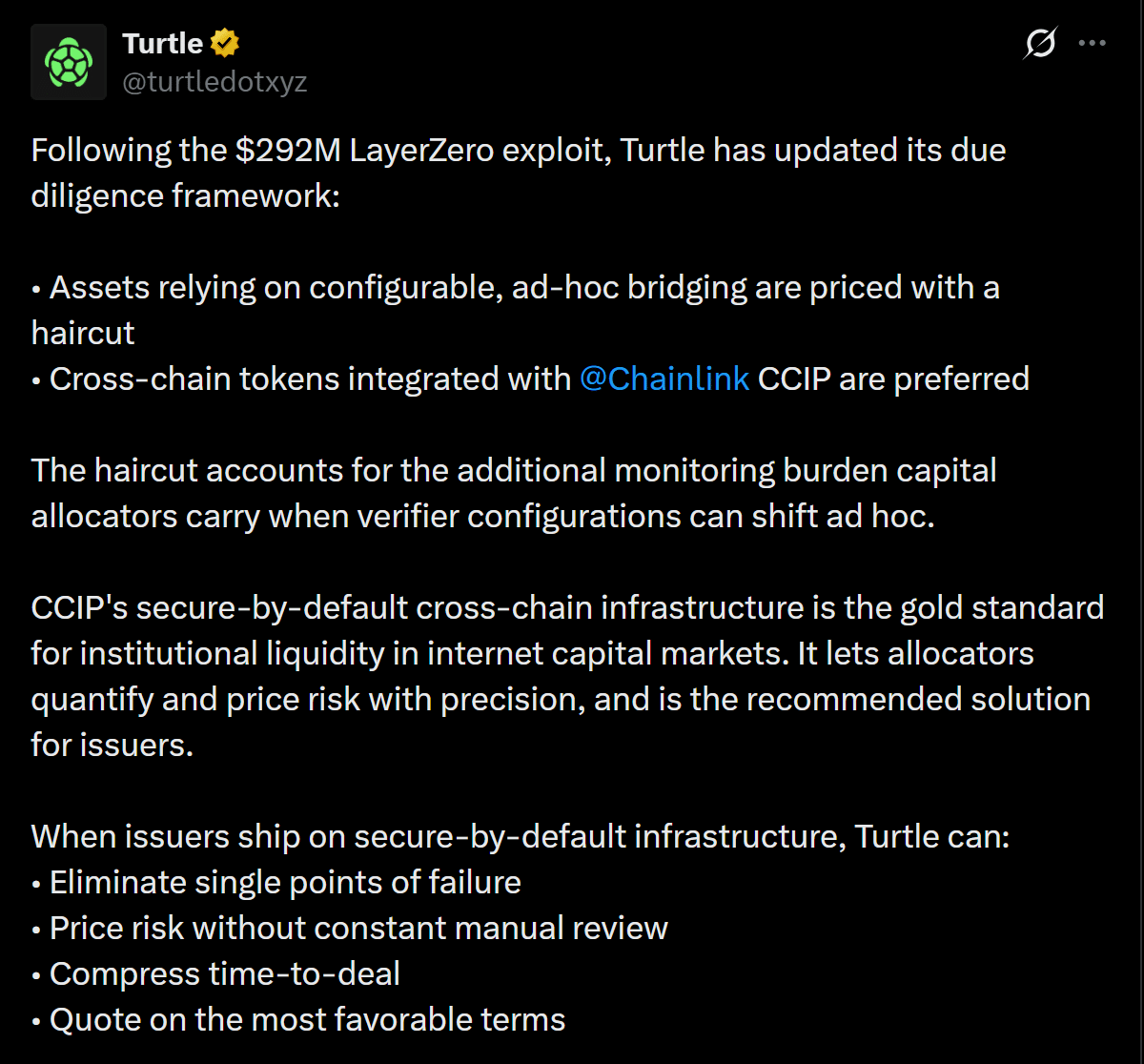
Meanwhile, cross-chain tokens integrated with Chainlink CCIP gained stronger preference because institutions increasingly favored secure-by-default infrastructure models.
That transition also reflected how bridges are no longer treated as neutral middleware across institutional capital markets. And yet, tighter standards may gradually strengthen long-term ecosystem resilience despite creating short-term liquidity fragmentation across smaller cross-chain networks.
DeFi recovery strengthens under lingering bridge risks
DeFi sentiment had already started stabilizing after weeks of uncertainty before rsETH collateral restoration gradually strengthened broader liquidity confidence again. Market participants also became less defensive once emergency recapitalization efforts steadily reduced deeper solvency fears across lending protocols.