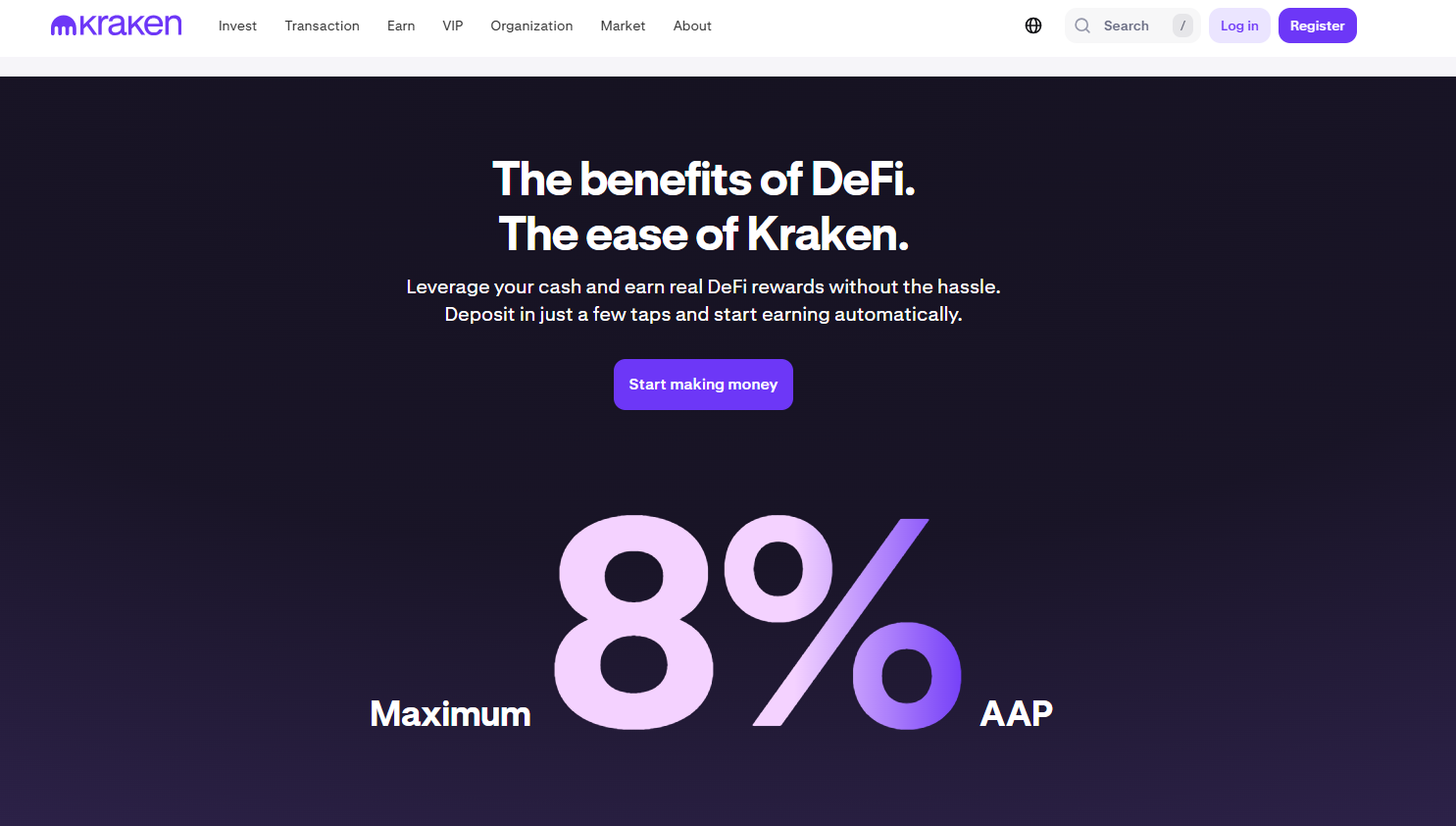
Kraken DeFi Earn product lets mainstream users earn up to 8% APY by allocating cash and stablecoins into audited on-chain lending vaults. The yield comes from real decentralized finance markets rather than from Kraken’s own balance sheet.

Deposits are converted into USDC and placed into Veda vaults on Ink, where they supply liquidity to protocols like Aave and Morpho. Returns are variable and shown net of Kraken’s 25% fee, and while the service is widely available, funds are not insured and carry on-chain risk.
Kraken DeFi Earn Explained: On-chain Vaults and ‘Up to 8% APY’
Kraken DeFi Earn is a yield product that allows users to earn up to 8 percent APY by depositing cash or stablecoins into on-chain vaults that lend to real DeFi borrowers. The funds are routed through Veda vaults and deployed into lending protocols such as Aave and Morpho, where borrowers pay interest.
The yield is not created by Kraken itself. It comes from decentralized lending markets where traders, arbitrageurs, and institutions borrow USDC and pay variable interest based on supply and demand.
Kraken acts as the regulated access layer, while the DeFi protocols provide the actual return. This structure allows users to earn on-chain yield without managing wallets, private keys, or blockchain transactions.
The entire system is managed by professional risk firms Chaos Labs and Sentora, while Kraken provides the regulated user interface and compliance layer.
This creates a three-layer structure:
- Kraken controls access and accounts
- Veda controls on-chain vault custody
- Chaos Labs and Sentora control risk and capital routing
This makes DeFi Earn a live on-chain yield engine inside a centralized exchange rather than a synthetic interest product.
Availability and Rollout: United States, Canada, Europe
Kraken DeFi Earn is available in 48 U.S. states excluding New York and Maine, across Canada, and in all European Economic Area countries.
The geographic rollout is tied to Kraken’s regulatory licenses:
- United States: 48 states, excluding NY and ME due to local restrictions
- Canada: Nationwide
- Europe: All 30 EEA countries, enabled through Kraken’s EMI license and MiCA framework
DeFi Earn is not a regulated bank product and funds are not insured. Kraken operates under regulatory frameworks, but the DeFi Earn vaults themselves carry explicit risk disclosures, including the possibility of smart-contract failure or protocol insolvency.
This design allows Kraken to offer regulated access to unregulated on-chain markets, similar to how brokers offer access to commodities or derivatives.
How to Start: Access, KYC, Deposit, Withdraw, Track Performance
Users must have a verified Kraken account to access DeFi Earn through the Earn tab on Kraken’s app or website. Standard KYC is required, including identity and address verification
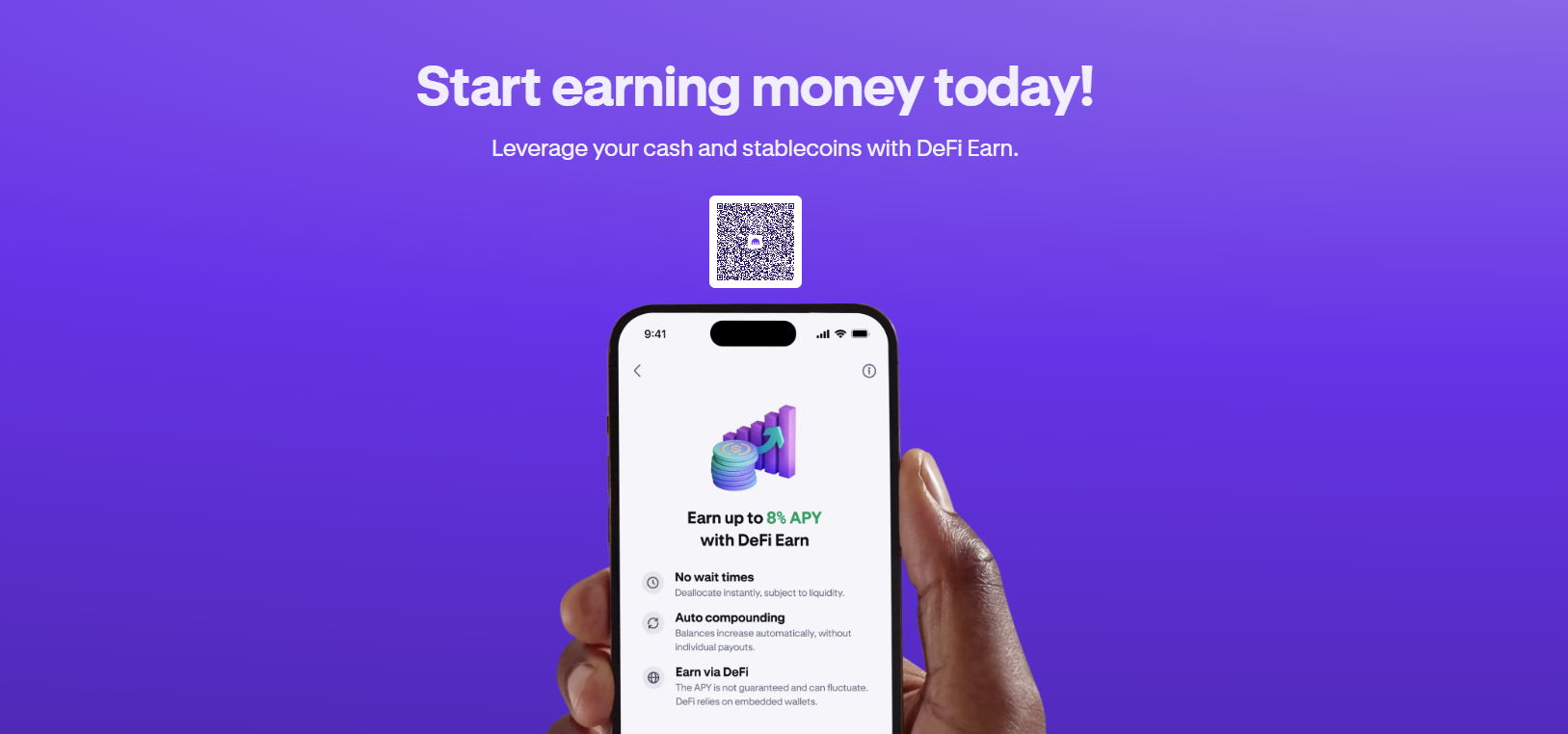
Access and KYC: Users must complete standard Know Your Customer (KYC) verification, including identity documents and proof of address where required
Deposit:
- Deposit cash or supported stablecoins into your Kraken balance
- Go to Earn → DeFi Earn
- Choose a risk strategy
- Kraken converts the funds into USDC
- USDC is placed into a Veda vault on Ink
Withdraw: Withdrawals are usually instant. If a vault temporarily lacks liquidity, withdrawals may be delayed until funds return from lending protocols, but assets remain in the vault earning yield.
Track Performance
- Real-time balance
- Accrued rewards
- Current and average APY
- Vault liquidity and TVL
How Chaos Labs’ Veda Selects and Manages DeFi Strategies
Supported assets and protocols: current scope only
Kraken DeFi Earn currently supports only USDC as the base asset. Cash and other stablecoins deposited by users are converted into USDC before being deployed.

The initial vaults allocate liquidity only to well known on-chain lending protocols, including Aave, Morpho, Sky, and Tydro. These protocols were selected because of their deep liquidity, long operating history, and large total value locked.
Chaos Labs and Sentora use a whitelist-based framework, meaning capital can only be deployed into approved protocols that meet predefined security and risk standards.
Security audits, custody, smart contract, protocol, liquidity risks
The Veda vaults used by Kraken DeFi Earn rely on audited smart contracts and established DeFi protocols. Aave and Morpho, for example, have undergone multiple independent security audits and are among the most widely used lending markets in DeFi
Funds are held in an embedded non-custodial wallet, meaning users retain ownership of their assets while they are deployed. Kraken does not take custody of funds in the same way as a normal exchange account.
Users are exposed to smart contract risk, protocol insolvency risk, and liquidity risk. If many users withdraw at once, funds may be temporarily locked in lending protocols until liquidity returns, although rewards continue to accrue.
Fees, Compliance, and Understanding Returns Over Time
Fees: what they are, when charged, impact on APY
Kraken charges a 25 percent performance fee on DeFi Earn rewards, not on the principal deposited. If a user earns $100 in rewards, Kraken deducts $25 and the user receives $75.
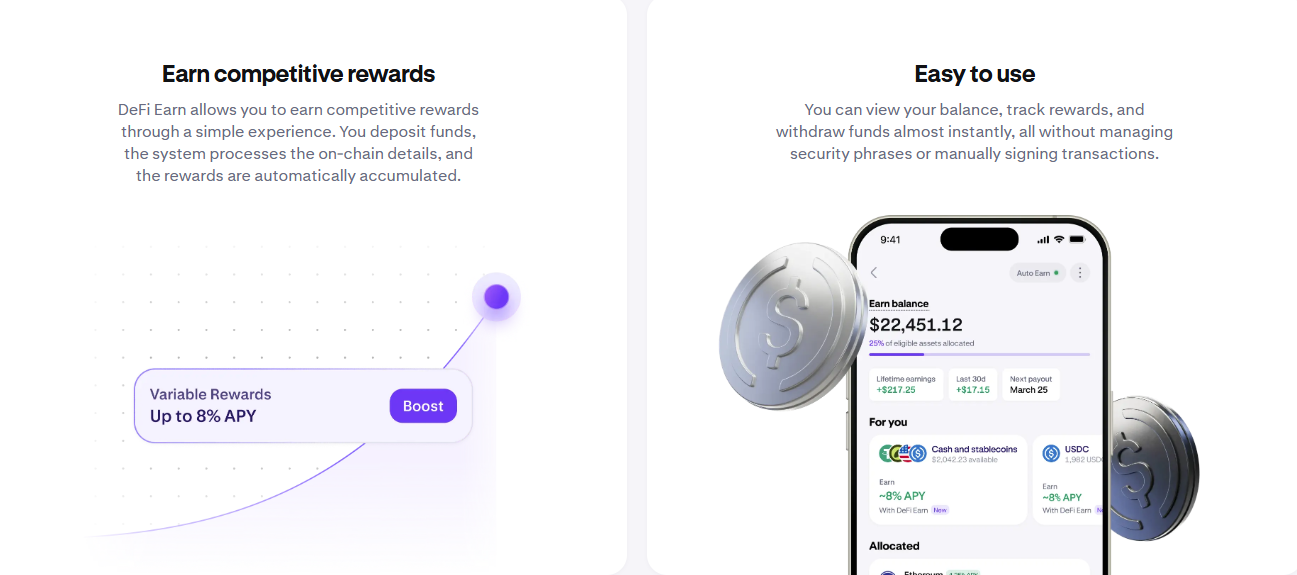
The fee is applied continuously as rewards accrue, because DeFi protocols such as Aave and Morpho generate interest in real time. There are no separate entry, exit, or gas fees for users.
Quick Fact: BingX exchange is offering exclusive perks for new users and VIP traders.
This means the APY displayed in Kraken’s Earn dashboard is already the net return after fees, making it easier for users to understand their true yield.
Performance tracking: dashboard, APY variability drivers, strategy transparency
Kraken provides a dedicated Earn dashboard that shows real-time balances, rewards, current APY, average APY, and vault liquidity. Users can monitor how their DeFi Earn position is performing at any time.
The APY is variable and not guaranteed. It moves based on borrower demand in Aave, Morpho, Sky, and Tydro, overall stablecoin liquidity, and how Chaos Labs and Sentora dynamically allocate capital across protocols.
Kraken also discloses the protocols used, the risk managers involved, and the fee structure, giving users a clear view into how their yield is generated and why it changes over time.
| DISCLAIMER: The information on this website is provided as general market commentary and does not constitute investment advice. We encourage you to do your own research before investing. |