Cloud mining is a capital-effective approach to crypto mining. Firms offering hosted mining services lower the barrier to crypto mining by managing the core mining procedures and requiring less resource commitment from investors. However, just like the regular energy and resource-intensive mining, the regulatory background for cloud mining is still developing. In this article, we review the cloud mining laws in key regions for investors who wish to know if cloud mining is legal in their country.
Why would a country ban cloud mining ?
Unlike the normal POW mining that requires miners to set up advanced mining rigs and consume high electrical energy, cloud mining does not require individual miners to set up or rig or run resource-intensive procedures. However, a country could ban cloud mining completely or set significant restrictions due to a few reasons. Unsurprisingly, in regions where cloud mining is banned or restricted, known reasons for the ban are similar to the reasons for banning regular mining and crypto operations.
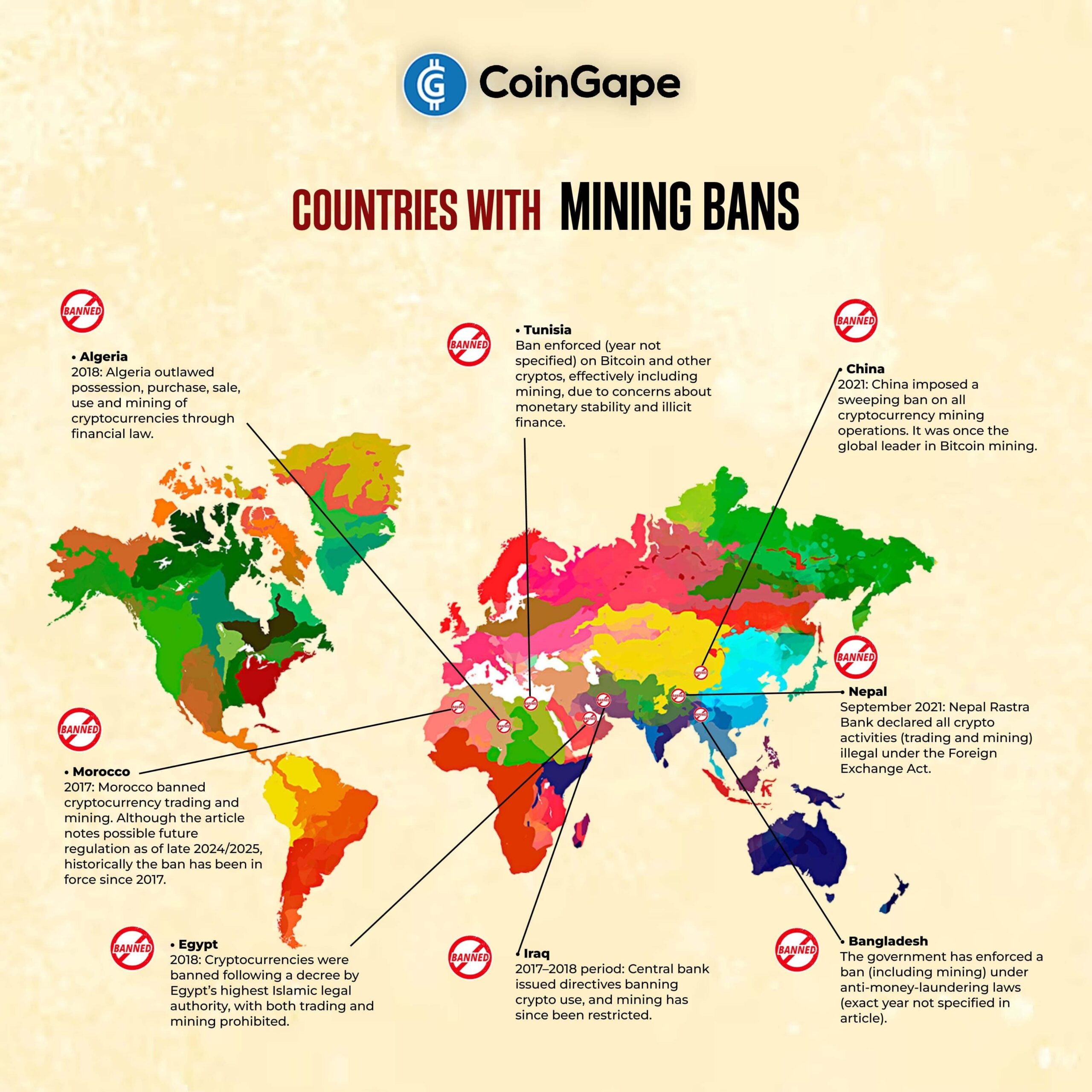

Countries either ban cloud mining due to a general anti-crypto stance, Energy-efficiency laws, and Investor protection rules. The energy-efficiency laws, as mining platforms, still require high energy resources to operate. Investor protection rules that apply to cloud mining are due to the several cloud mining scams that target investors.
Is Cloud Mining Regulated ?
Cloud mining enjoys significant regulatory oversight. Unlike regular mining, cloud mining is legal in most key regions. This is particularly for individual investors; Hosted mining service providers still face regulatory scrutiny because they consume enormous electrical power in their operations. Cloud mining can often serve as a workaround because the actual mining occurs in a different jurisdiction.
Restrictions that apply to cloud miners are related to cryptocurrency transactions, like receiving mining payouts, capital profit taxation, or anti-money laundering rules.
Country-by-country Overview of Cloud Mining Laws For 2025
Here let’s review some notable countries and their cloud mining laws. Crypto Mining and mining hosting services are legal in the United States. There is no federal ban on cloud mining and hosted mining service operations in the US. However, for platforms, some non-specific rules may affect their operations. Regulations on energy consumption and noise pollution may apply to cloud mining platforms, but platforms that comply with these laws operate freely.
An important point to note is the new energy tax laws. Review the energy law in your region and operate accordingly. For individual cloud miners, crypto tax laws may apply. Revenue generated from your cloud mining investments may be taxable by law. Consult experienced taxation professionals to understand the laws that apply to your cloud mining profits.
United Kingdom
Crypto mining is legal in the UK. Cloud mining platforms and investment are also legal in the region. There may be restrictions due to energy consumption, but mining activities are covered in the nation’s laws. Note that crypto tax laws may apply to your mining earnings.
China
China has maintained an anti-crypto mining stance. Normal crypto mining is banned in the region, while crypto custody and transactions are regulated by strict laws. The ban on crypto mining is mainly on the grounds of energy efficiency for industrialization. Hosted mining using platforms whose mining centers are in other regions is a known workaround for investors interested in crypto mining. However, setting up and running a mining platform in China is prohibited.
European Union
The legality of hosted mining in the EU varies according to member countries. Generally, hosted mining for individual investors is legal in EU countries; however, running a mining platform may be banned in some countries. The reason for the ban is mostly energy conservation. Running a cloud mining facility in countries like Germany requires compliance with regulatory provisions. Review the laws in the region you wish to operate in for certainty. For individual investors, earning from cloud mining may be taxable in your region.
Canada
Crypto mining and cloud mining are legal in most Canadian provinces. However, regions like British Columbia have an active ban on mining activities and running a cloud mining platform. Manitoba also has significant restrictions for cloud mining platforms. These restrictions do not apply to investors using cloud mining platforms whose facility is located in other countries. Stay in sync with the crypto laws in the region, your hosted mining profits may be liable to taxation.
India
India’s stance on cloud mining is uncertain. While there are no explicit bans on crypto mining, there are also no supporting laws. The regulatory landscape for mining is still developing in the region; this applies to cloud mining as well. Currently, investors are free to use cloud mining platforms or set up mining platforms; however, this may change in future regulatory reforms. Also note that there may be restrictions on crypto operations like custody and spending of your cloud mining earnings.
Nigeria
Nigeria generally has relaxed crypto regulation. There are no known bans on crypto custody and usage in the region. While the government has taken action against crypto service providers on several instances and restricted crypto operations, there are no standing laws against crypto at the time of writing. In the same vein, cloud mining is not restricted in Nigeria. However, there are also no laws in support of cloud mining in the region. The regulatory background for crypto in Nigeria is developing, including recent regulatory reforms that may tax crypto income. Cloud mining revenue may be taxable under emerging laws.
Algeria, Nepal, Bolivia, and Egypt
Crypto and crypto mining operations are banned in these regions. The general anti-crypto laws affect cloud mining, too. Note that cloud mining, crypto custody, and spending in these regions may attract strict penalties. If you are in this region and interested in hosted crypto mining, you are advised to consult experts to gain a better understanding of the laws that apply.
Future outlook for cloud crypto mining
Generally, regulatory bodies frown at crypto mining due to the high energy requirements. Regions with abundant electrical energy often have softer regulations for crypto mining and regard it as a way of utilizing the excess energy. Another major reason for tight regulation is anti-crypto laws.
Current events hint at positive developments in both aspects. Crypto mining projects are experimenting with greener alternatives for generating energy for mining. For instance, stable issuer, Tether, is exploring an eco-friendly approach to crypto mining through renewable energy and a decentralized mining infrastructure.
On the other hand, crypto adoption is growing in key regions, and many nations are rethinking their anti-crypto laws. As greener mining solutions emerge and countries grow more crypto-friendly, cloud mining may become legal in more regions. The possibility, however, depends on concurrent success on both ends (green energy and pro-crypto laws).
Conclusion
You can probably mine crypto via cloud mining in your region. Most country has simpler rules for cloud mining, but this doesn’t apply to cloud mining platform operators. If you are in a region where normal mining is banned, you may explore other mining options. But keep in mind that cloud miners are still liable to laws governing crypto usage in their region. Ensure that you understand these laws, especially where they concern custody, spending, and taxation. We also recommend due diligence before investing in any hosted mining service providers. Where possible, review the cloud miner’s license, user opinions, and offerings before you invest.