Gold prices have surged to all-time highs as escalating US–Iran tensions drive a global rush into safe-haven assets. Gold reached $5,000 per ounce on January 26, 2026, then extended its rally during the January 28, 2026 session, culminating in spot prices breaking above $5,500 as geopolitical risk intensified.
On January 29, 2026, spot gold traded above $5,500 while silver hit nearly $120, with GLD closing at $494.56 and SLV at $105.60. At the same time, Brent crude rose to about $67.69 per barrel, the U.S. dollar index weakened to around 96.41, and the 10-year Treasury yield hovered near 4.24%, reinforcing safe-haven demand.
Why Gold and Silver Hit Records: Federal Reserve, Real Yields, Geopolitics
Gold and silver are hitting record highs because markets are pricing in Fed rate cuts, collapsing real yields, and a surge in safe-haven demand driven by global geopolitical instability.
- Markets expect the Fed to start cutting rates as early as June 2026, lowering the opportunity cost of non-yielding assets
- Real yields are falling, pushing capital from bank deposits into precious metals.
- USD is weakening as monetary easing is priced in, making gold and silver cheaper for foreign buyers.
- Escalating conflicts (Middle East, Arctic security, US-China, US-Europe trade wars) are driving safe-haven demand.
- Political pressure and investigations into the Fed’s independence are increasing distrust in US monetary policy.
- Central banks in Asia and the Middle East are accelerating gold purchases to diversify away from USD reserves.
- Herd behavior and speculative inflows (FOMO) are amplifying price momentum
What Today’s Move Means for XAU/USD, XAG/USD, U.S. 10-year Treasury Yield
The current rally shows that gold and silver are decoupling from bond yields and trading primarily as geopolitical and monetary risk hedges.
- XAU/USD: above $5,500/oz, continuing a multi-day breakout.
- XAG/USD: around $118–$120/oz, deep into triple-digit territory.
- US 10Y yield: stable near 4.25%, showing the rally is not yield-driven.
What this means:
- Investors are shifting into metals as policy and geopolitical hedges, not yield trades.
- The Fed holding rates while signaling future cuts is creating uncertainty, accelerating capital flows into gold and silver.
How to Get Exposure: SPDR Gold Shares (GLD), iShares Silver Trust (SLV)
GLD and SLV provide indirect ownership of physical gold and silver without storage or insurance risk, and are the fastest way to gain exposure to this rally.
- Both ETFs can be bought like stocks via any brokerage account.
- They are backed by physical metals in vaults, tracking spot prices
| Feature | GLD | SLV |
|---|---|---|
| Asset | Physical gold | Physical silver |
| Volatility | Lower | Higher |
| Expense ratio | ~0.40% | ~0.50% |
| Liquidity | Very high | Very high |
Gold vs Silver Positioning: Safe-Haven vs Industrial Tailwinds
Gold–silver ratio, real yields, Inflation, risk-off regimes
Gold and silver are rising together, but they are being driven by two different demand engines shaped by monetary stress and capital rotation. Gold absorbs fear, currency debasement, and policy distrust, while silver amplifies cycles through higher volatility. This divergence explains why silver is now outperforming gold during global risk-off regimes.
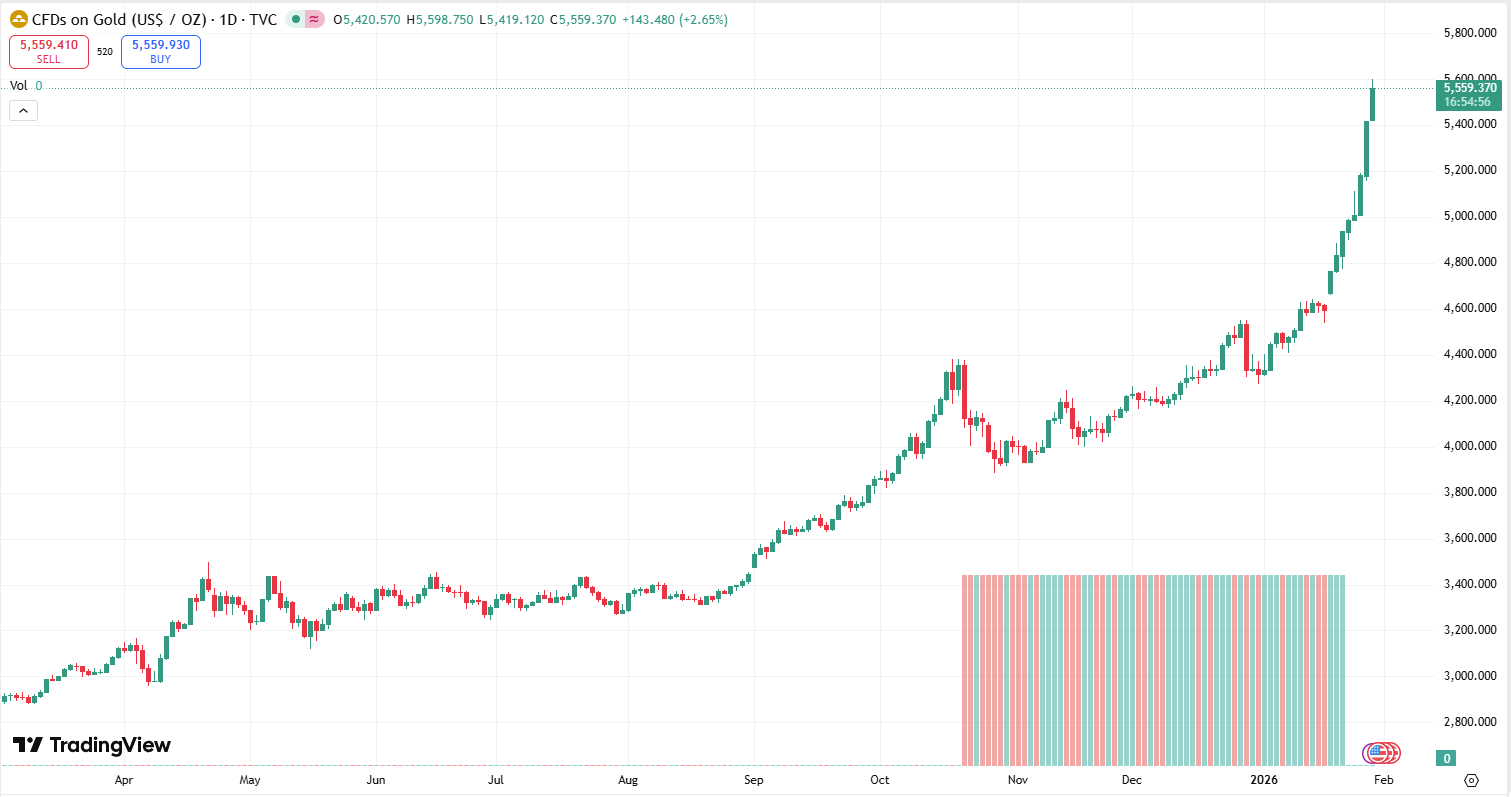
Gold is no longer trading as a cyclical commodity but as monetary insurance against institutional credibility risk and fiat erosion. Stephen Innes described gold as “the inverse of confidence,” meaning it rises when belief in policy coherence collapses. That shift is why gold trades like a referendum on fiat stewardship.
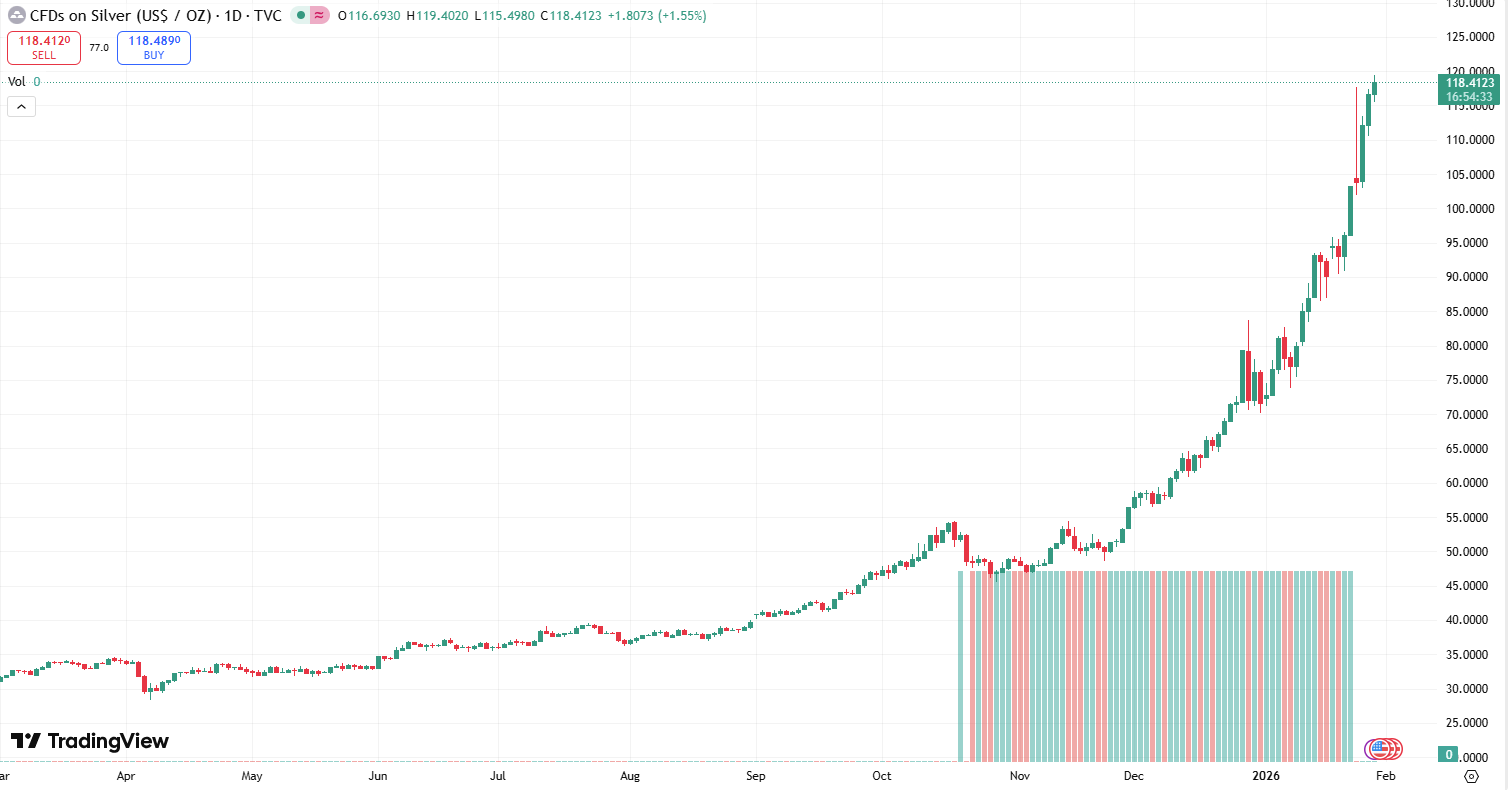
Silver’s rally is structurally supported by electrification and clean-energy demand that are tightening physical supply. Solar, grid infrastructure, and electronics reduce inventories while speculative capital enters at scale. This combination creates a momentum feedback loop that accelerates price moves.
The gold–silver ratio is compressing as silver’s beta expands and traders rotate toward higher-volatility assets. Historically, this occurs late in commodity super-cycles when liquidity flows intensify. That same pattern is now repeating under debasement conditions.
US–Iran tensions, oil prices, DXY and safe-haven demand
Geopolitical escalation in the Middle East has weakened the dollar and accelerated safe-haven flows into precious metals. Energy price shocks reinforce gold demand because higher oil raises inflation expectations and undermines real purchasing power.

Oil surged to four-month highs after Trump urged Iran to negotiate or face further military action. WTI settled above $63 per barrel while Brent climbed toward late-summer highs, reflecting fears of regional supply disruption. Energy inflation is reinforcing demand for hard assets.
The U.S. dollar has slid to multi-year lows, boosting commodity prices globally by weakening the pricing denominator. A softer dollar mechanically lifts gold and silver valuations and reinforces the debasement trade. This currency effect now compounds geopolitical risk.
Allocation & Vehicles: ETFs, Miners vs Bullion, Liquidity and Risks
SPDR Gold Shares (GLD) and iShares Silver Trust (SLV) ETF flows
Capital inflows into precious metals are increasingly liquidity-driven rather than fundamentally driven. Thin market depth means even modest ETF subscriptions can now trigger outsized price reactions across gold and silver. This has amplified volatility and detached prices from physical supply dynamics.
GLD and SLV act as fast transmission channels for global risk-off capital, allowing instant exposure to metals. While this improves access, it also magnifies speculative momentum during uncertainty. As a result, price swings can accelerate beyond physical demand.
COMEX futures, LBMA spot, counterparty risk
Maximilian Tomei noted that precious metals increasingly serve as a parking zone for excess global liquidity created by leverage. When equity valuations stretch, capital migrates into gold and silver regardless of fundamentals. This explains recent dislocations.
Quick Fact: BingX exchange is offering exclusive perks for new users and VIP traders.
Guy Wolf of Marex emphasized that silver markets are far smaller than major equity benchmarks, so speculative inflows have an outsized impact on price discovery. Once liquidity dries up, these gains can reverse violently. This creates structural instability.
For investors, volatility risk is now structural rather than temporary. ETFs provide speed but also amplify drawdowns during reversals. Physical bullion reduces counterparty risk but remains exposed to macro-driven price swings.
| DISCLAIMER: The information on this website is provided as general market commentary and does not constitute investment advice. We encourage you to do your own research before investing. |