In 2025, Ethereum [ETH] introduced two major upgrades: Pectra in May and Fusaka in December. These improvements enhanced speed and scalability, particularly for layer‑2 solutions, by increasing data availability and lowering node costs.
Looking ahead to 2026, Ethereum plans to build on this progress with the Glamsterdam fork and the Heze‑Bogota upgrades.
Glamsterdam fork for speed and efficiency
ETH is gearing up for a massive scaling step in 2026. One of the key upgrades expected is the Glamsterdam Fork, which could go live mid-year.
The upgrade is projected to bring parallel transaction processing, enabling Ethereum to handle multiple tasks simultaneously.
Coupled with this, there will be a significant increase in the gas limit, which could jump from 60 million to 200 million, with the potential to rise even higher by year’s end.


Source: Ycharts
This increase could enable many more transactions to fit into each block, thereby reducing congestion. Another expected change is with Glamsterdam’s usual validator operations.
Previously, validators validated complete transaction data; now, they will move toward zero-knowledge proofs, thereby reducing workload.

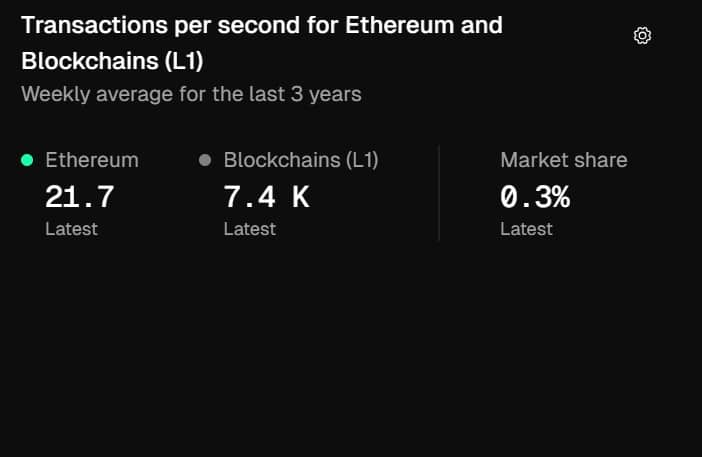
Source: Token Terminal
With these major upgrades, Ethereum’s network will benefit significantly, rising from its current 21 TPS to a projected 10k TPS.
Heze-Bogota Fork to strengthen privacy
In addition to speed addressed in Glamsterdam, Ethereum also seeks to address privacy concerns.
In this regard, Ethereum will launch the Heze-Bogota Fork in late 2026 to address privacy, resist censorship, and promote decentralization.
The upgrade aims to reduce reliance on centralized infrastructure, making it difficult for a single entity to block transactions. As such, improving censorship resistance is especially important amid growing blockchain integration and global regulations.
Amid growing adoption, Ethereum will become increasingly open and permissionless with the Heze-Bogota fork.
Upgrades’ impact on ETH price outlook
With Ethereum closing in on higher speeds, increased privacy, and ZK validation, it positions ETH for long-term, sustainable growth.
In fact, the success of these constant developments leaves the network in a stronger, more competitive position in an ever-evolving space.
With the 2026 upgrades debates hitting the market, ETH has stabilized below $3k. In fact, ETH has hovered around $2.8k and $2.9k, with $3k acting as immediate resistance.


Source: TradingView
The altcoin’s Future Grand Trend points to a bullish finish for 2025 and a strong start to 2026. The indicator suggests ETH could close the year above $3,000, trade between $3,200 and $3,400, and then retrace in mid‑January.
Still, the market is weighed down by persistent bearish pressure, and a broader crypto recovery may be needed to realize this optimistic outlook heading into 2026.
Final Thoughts
- Ethereum targets, Glamsterdam fork, and Heze-Bogota upgrades in 2026 to address privacy, decentralization, and efficiency concerns
- ETH remains stuck below $3k, but the Future Grand Trend indicator suggests a bullish close to 2025.
Source: https://ambcrypto.com/ethereum-how-eths-2026-upgrades-aim-to-reshape-the-network/