JPMorgan analysts have indicated that Bitcoin remains at risk of a decline, despite the recent rally to $74,000 amid geopolitical tensions between the U.S. and Iran. This came as they noted that stocks did not initially sell off until about a month after the Ukraine war began, a similar pattern that played out for BTC back then.
Bitcoin Price Still Risks Decline as JPMorgan Notes Market Reaction To Ukraine War
JPMorgan analyst Nikolaos Panigirtzoglou highlighted the market’s reaction when the Ukraine war first broke out in 2020, indicating that risk assets could still decline if the Iran war lasts longer than investors expect. The analyst noted that retail investors first held on to stocks for about a month after the Ukraine war began.
However, these investors began to dump these assets once it became clear that the war would last for an extended period and drive inflation higher through rising energy prices. Notably, the Bitcoin price suffered a similar fate to stocks back then as the leading crypto first surged on the back of the war before dumping later on.
JPMorgan stated that this pattern is key to understanding how the market reacts to geopolitical crises. Market analyst Ted Pillows noted that when the Russia-Ukraine war began, BTC pumped by almost 40% and then dumped by 67%. The analyst expects a similar scenario to play out this time around with the U.S.-Iran war.
He predicted that the Bitcoin price could pump to as high as $80,000 before the next downtrend begins. BTC rallied to a one-month high of $74,000 yesterday, with traders still pricing in the possibility that the Iran war would be short-lived.
BitMEX co-founder Arthur Hayes recently warned that Bitcoin’s rally could be a dead cat bounce. This came as he noted that the leading crypto hasn’t fully decoupled from U.S. SaaS tech companies and could still decline if these companies’ stocks fall.
ETF Inflows And Short Covering Driving BTC Rebound
A CryptoQuant analysis noted that the renewed inflows into the U.S. spot BTC ETFs are one of the main drivers behind the Bitcoin price rebound. As CoinGape reported, the Bitcoin ETFs recorded daily net inflows of $458 million on Monday, the first trading day after the Iran war broke out over the weekend. They have since followed this up with net inflows of $225 million and $462 million on March 3 and 4, respectively.
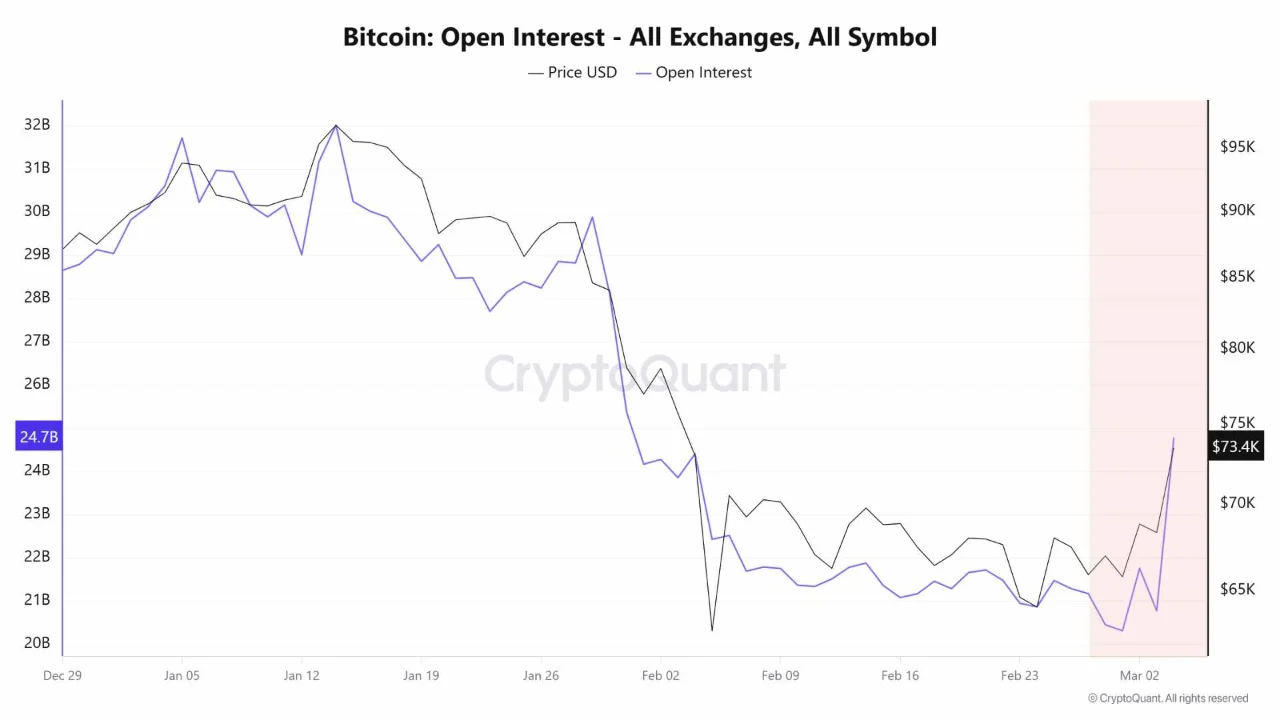
CryptoQuant also stated that the derivatives market has played a critical role in the rebound. Open Interest rose while funding rates moved into negative territory, a development which signals crowded short positioning. As such, short liquidations triggered a short covering, which amplified BTC’s rally as the price broke above $70,000 yesterday.
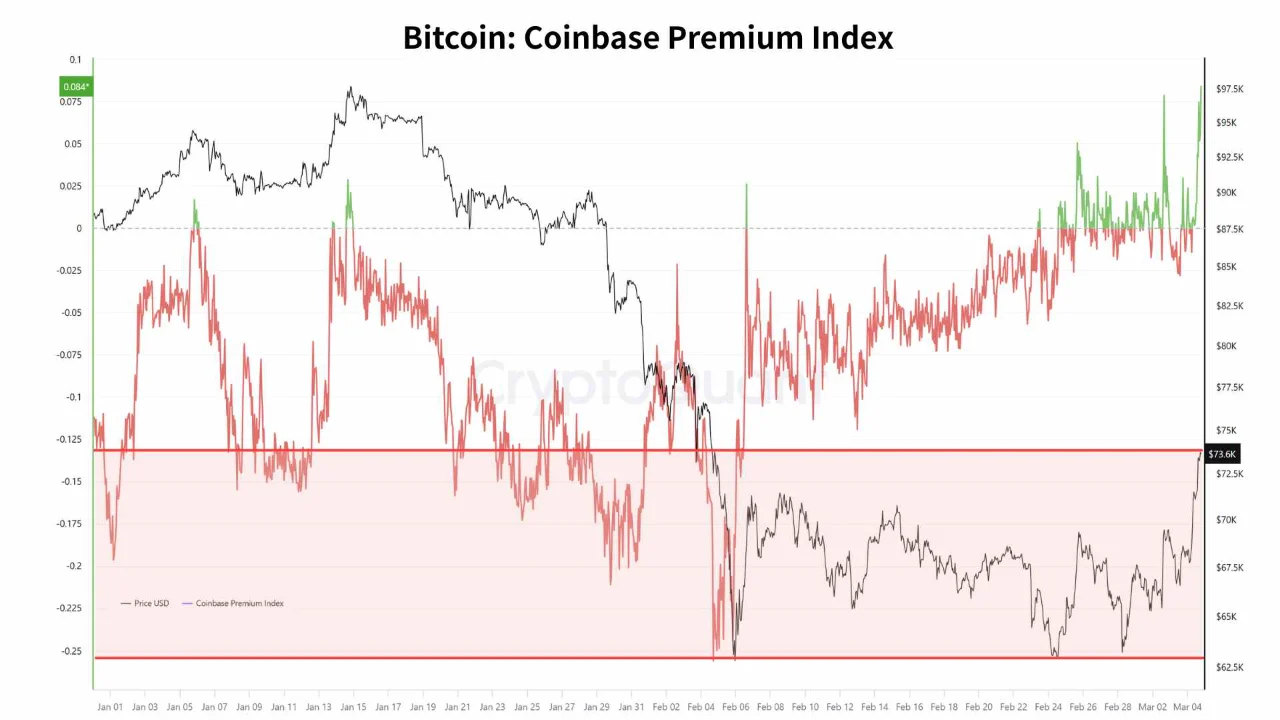
The analysis noted that on-chain data shows a mixed structure. At the moment, bearish signals include the 90-day Realized Profit/Loss Ratio remaining below 1.0 and an increase in coins held at unrealized losses. On the other hand, there are also some positives. These include the Coinbase Premium Index, which has returned to positive territory after languishing in the negative territory for an extended period. The shift signals renewed demand for BTC among U.S. investors.