Bitcoin is approaching $70,000 as US–Iran military escalation drives sharp cross-asset volatility. After plunging to $63,255 on February 28 in a risk-off reaction, BTC staged a V-shaped rebound above $69,000 as institutional ETF demand returned.
Gold surged to record highs above $5,377 while Brent crude climbed toward $80 on Strait of Hormuz concerns. With the Fed holding rates at 3.50 to 3.75 percent and inflation risks rising, Bitcoin now sits at a critical macro inflection point near $70,000.
Why BTC is near $70K into US open: stocks, risk
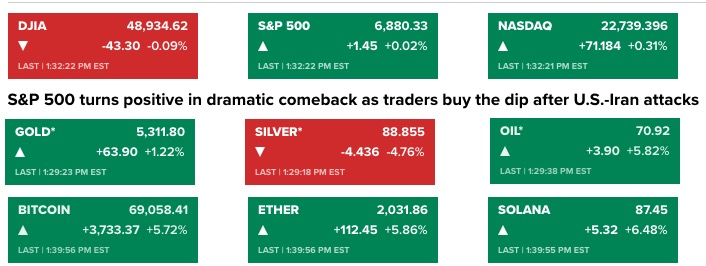

Bitcoin is trading just below the 70,000 dollar psychological threshold after rebounding sharply from a weekend low near 63,000. The initial decline followed US and Israeli airstrikes on Iran, which triggered broad liquidation across risk assets.
The reopening of US exchanges and CME futures coincided with renewed demand from spot Bitcoin ETFs. At the same time, US equities staged a V shaped recovery led by defense and energy stocks despite oil trading in the 72 to 79 dollar range.
Bitcoin dominance has climbed toward 56 to 57 percent, signaling that capital is concentrating in BTC rather than spreading across altcoins. Correlation with US equities remains moderate at roughly 0.55, indicating partial decoupling but not full independence.
The structure of the rebound suggests a rotation into Bitcoin as a perceived geopolitical hedge rather than a broad speculative rally. Short positioning also contributed to the move. As BTC reclaimed key intraday levels, leveraged shorts were forced to close, accelerating upside momentum.
With liquidity compressed below 70,000, the market now sits at a technical inflection point where a breakout or rejection will determine near term direction.
Drivers now: US–Iran headlines, Federal Reserve backdrop, inflation, Arthur Hayes
Geopolitical escalation between the United States and Iran remains the dominant macro driver. The initial reaction to military strikes was a selloff across risky assets. Yet Bitcoin rebounded quickly as the narrative shifted toward decentralized hedge demand.
The Federal Reserve continues to hold rates between 3.50 and 3.75 percent following its January meeting. Inflation pressures remain visible, with January PPI reaching 2.9 percent.
Brent crude prices have climbed toward 77 to 82 dollars amid concerns over disruption in the Strait of Hormuz. Rising oil increases stagflation risk, which could delay potential rate cuts and tighten liquidity conditions.
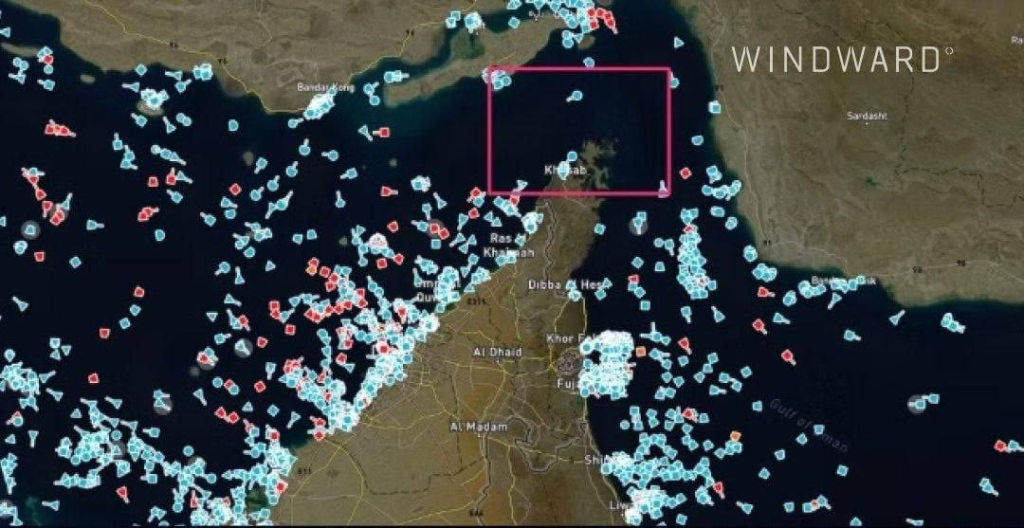
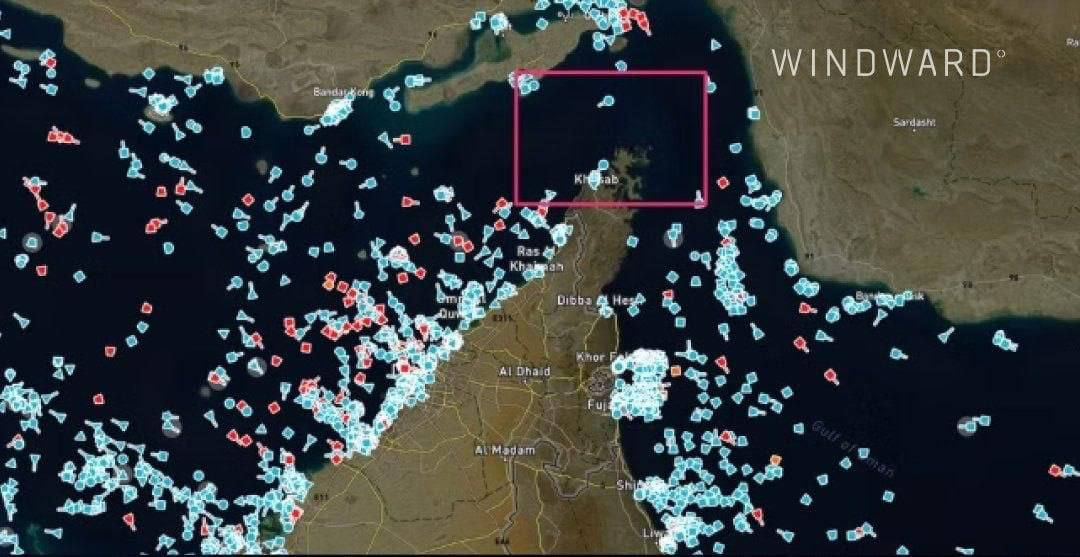
Arthur Hayes offers a longer term perspective rooted in historical precedent. He argues that prolonged military engagement often results in fiscal expansion and eventual monetary accommodation.
Under such conditions, he projects Bitcoin could reach substantially higher valuations over time. hile that outlook is long term, it reinforces the structural narrative that Bitcoin functions as a hedge against fiat debasement.
The market therefore faces competing forces. In the short term, higher yields and a stronger dollar can pressure crypto. In the medium term, expanding fiscal deficits and potential monetary easing strengthen Bitcoin’s macro thesis.
Spot Bitcoin ETFs: flows and premium/discount to NAV (IBIT, FBTC, ARKB, GBTC)
US spot Bitcoin ETFs have shown a strong recovery after five consecutive weeks of outflows. Over three trading sessions, funds attracted more than 1 billion dollars in net inflows.
| ETF | Recent Flow | Structural Trend | Premium/Discount | Market Signal |
|---|---|---|---|---|
| IBIT | +297M USD | Strong cumulative inflow | Near NAV | Institutional anchor |
| FBTC | Mixed | Neutral | -0.17% | Divergent demand |
| ARKB | Mixed | Short term outflows | Small fluctuation | Tactical allocation |
| GBTC | Rare positive days | Long term outflow history | ~0% | Structural normalization |
IBIT remains the dominant vehicle, recording a 297 million dollar inflow on February 25 and accumulating more than 60 billion dollars in total inflows since launch.
Other funds show more divergence. GBTC has posted rare positive sessions despite a longer history of cumulative outflows. FBTC and ARKB reflect mixed institutional appetite, with both inflows and outflows depending on liquidity conditions.
Importantly, premium and discount spreads relative to NAV remain minimal across major ETFs. This reflects structural maturity in the ETF ecosystem and reduces distortion that previously influenced pricing during earlier cycles. Current price strength therefore reflects real capital allocation rather than discount compression dynamics.
ETF flow magnitude is a critical breakout variable:
- Sustained inflows above 500M USD per day increase probability of breaking 70,000
- Outflows exceeding 200M USD in a session threaten the 68,000 support zone
ETH and XRP vs BTC: breadth check and crypto market cap
ETH/BTC and XRP/BTC relative strength since US market open
Relative strength inside crypto remains uneven.
- ETH/BTC trades around 0.029 to 0.034, showing persistent relative weakness
- XRP has demonstrated short term outperformance versus ETH and occasional strength against BTC
- BTC dominance holds near 56 to 57 percent
Ethereum’s underperformance reflects capital concentration in Bitcoin ETFs rather than broad ecosystem expansion. XRP’s relative strength appears narrative driven rather than structural. This divergence indicates an internal crypto defensive rotation rather than
Is crypto market cap advancing with stocks or BTC-led?
Although US equities recovered intraday, the expansion in total crypto market capitalization is primarily BTC led. Bitcoin dominance near 56 to 57 percent indicates capital concentration rather than broad participation.
When rallies are BTC led rather than broad based, volatility tends to cluster around the dominant asset. Such conditions can persist, but they often precede either consolidation or sharp rotations depending on macro developments.
Support/resistance, volatility/liquidations, invalidations, next 24–72h watchlist
Key BTC support and resistance levels, invalidation zones, downside risk
| Level Type | Price Zone | Interpretation |
|---|---|---|
| Major Resistance | 70,000–71,800 | Breakout trigger |
| Immediate Support | 66,500–67,200 | Short term defense |
| Structural Support | 64,500–65,200 | High volume demand |
| Bullish Invalidation | Below 63,800 | Trend breakdown |
A sustained close above 71,800 would invalidate the corrective structure and open higher price discovery. A break below 63,800 would confirm short term structural failure.
Watch volatility/liquidations into US market open; monitor risk sentiment
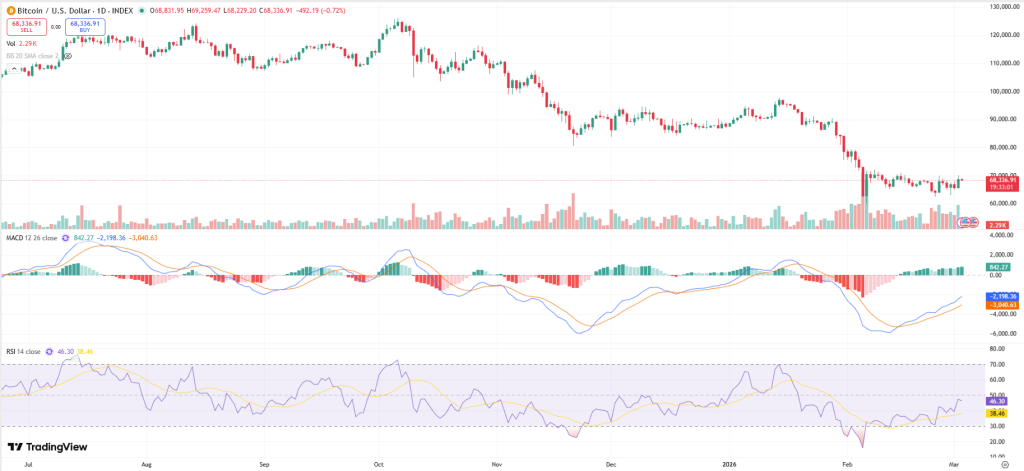
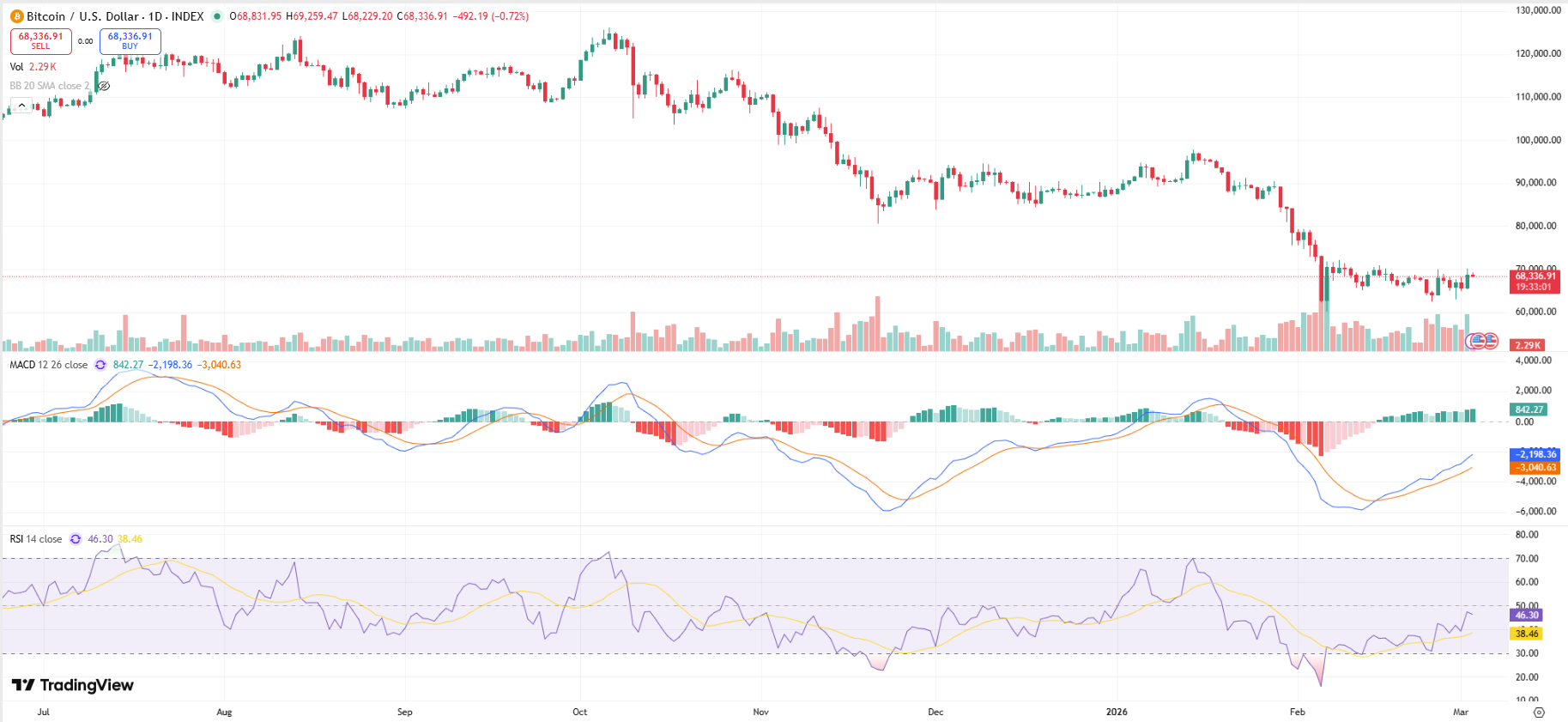
Liquidation clusters remain significant above 71,000 and below 65,000. Approximately 1.5 to 2 billion dollars in short positions could be forced to cover if resistance breaks.
Market sentiment currently reflects elevated greed conditions around 75 out of 100. Historically, such sentiment near major resistance levels often precedes shakeouts designed to clear leveraged positioning before sustained trends develop.
Over the next 24 to 72 hours, ETF flows, dollar strength, bond yields and geopolitical headlines will determine directional follow through. Bitcoin remains positioned between breakout potential and macro driven volatility, with institutional flows and headline risk acting as the primary catalysts.
| DISCLAIMER: The information on this website is provided as general market commentary and does not constitute investment advice. We encourage you to do your own research before investing. |