Bitcoin could face new pressure this week as Trump tariffs move toward a 15% global rate. This comes as tensions linked to the Iran war remain in focus, even after Bitcoin rebounded today. U.S. Treasury Secretary Scott Bessent said the 15% tariff will likely start this week and return to prior levels within five months.
Trump Tariffs Threaten Bitcoin Price
The Trump tariffs could put the BTC price under pressure. During a CNBC interview, U.S. Treasury Secretary Scott Bessent signaled that the 15% global tariffs would take effect this week. He also predicted that the tariffs could return to the levels they were prior to the Supreme Court’s ruling, later this year.
At the time of writing, the Bitcoin price is above $73,000, up by 7.45% in 24 hours. It also gained 7.80% over the past week. The move extended Tuesday’s rebound, when Bitcoin reclaimed $68,600 after sliding below $67,000.
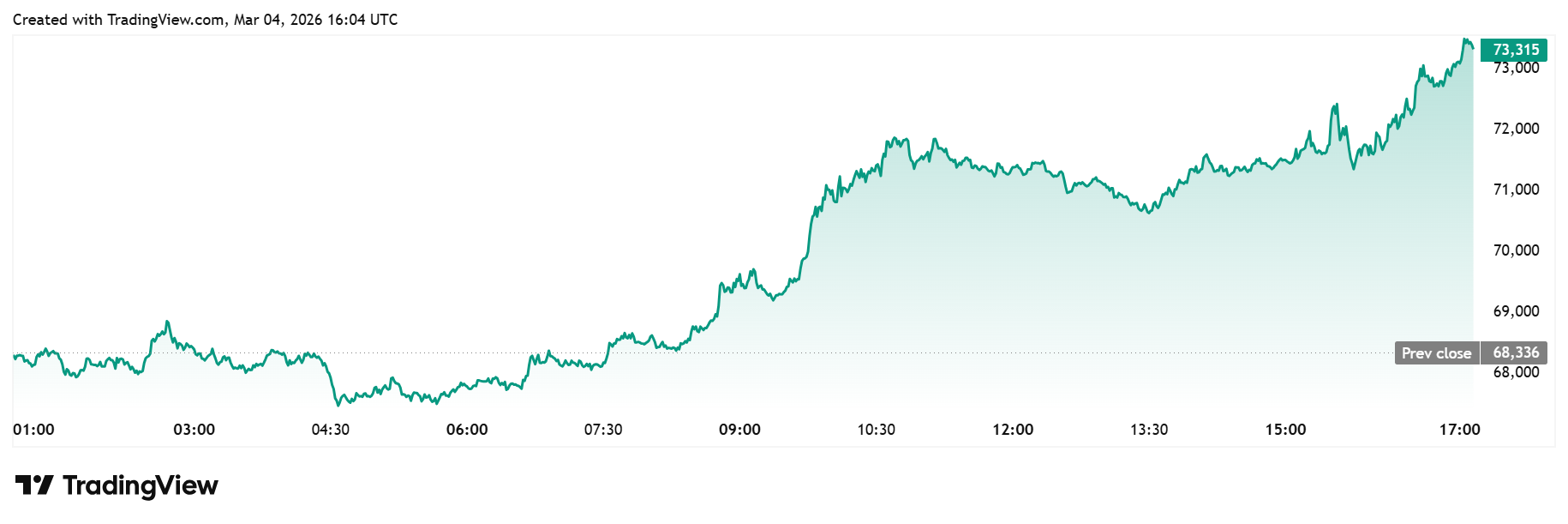

As CoinGape reported, tensions appear to be easing as Iran reached out to the U.S. about ending the conflict, which has contributed to the current rally. Iran reportedly contacted the Central Intelligence Agency through its intelligence service. Earlier, President Donald Trump said Iran had reached out, although he called it too late.
Meanwhile, CryptoQuant analyst Darkfost said Bitcoin shows resilience despite uncertainty due to the Middle East tensions and Trump tariffs. He noted five consecutive days of inflows into spot Bitcoin ETFs. In addition, derivatives data pointed to renewed buying activity.
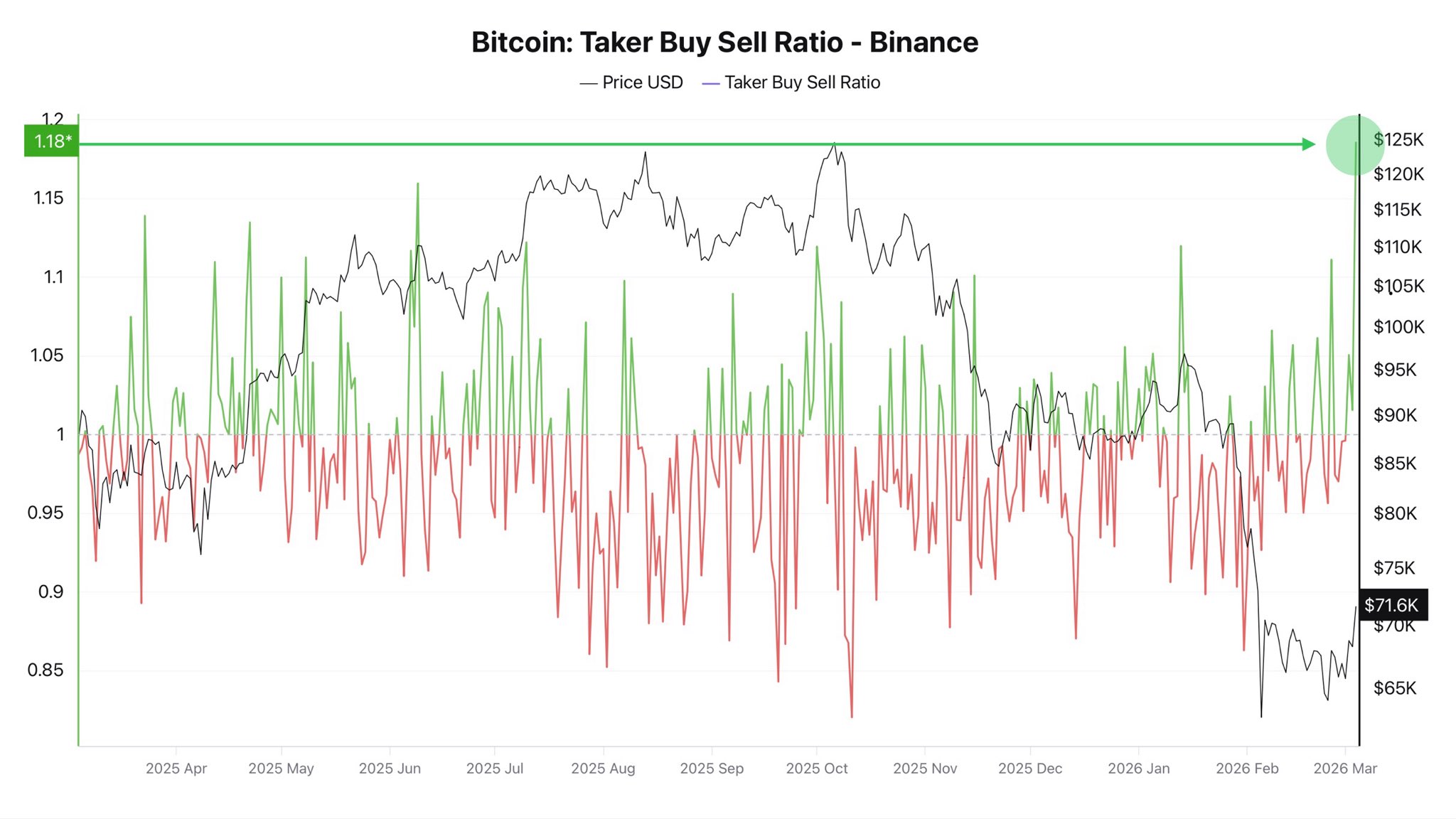
 Source: Darkfost
On Binance, the Taker Buy Sell Ratio reached 1.18, the highest level this year. The metric tracks aggressive buy and sell volumes in derivatives order books. Notably, taker buy volume exceeded $1 billion per hour several times, pushing Bitcoin above $71,000.
Middle East Tensions Still Risk Disrupting Markets
In addition to Trump tariffs, geopolitical risks remain active. According to Walter Bloomberg, Iran could disrupt the Strait of Hormuz for months using drones. The Strait carries about 20% of the global energy supply.
Reports show Tehran launched hundreds of missiles and over 1,000 drones. It can reportedly produce up to 10,000 drones monthly. Energy markets reacted as oil and gas prices climbed. Oil prices have surged to two-year highs, leading to dips in BTC price after surges. While most attacks face interception, limited strikes have slowed shipping activity.
Goldman Sachs CEO David Solomon warned that markets have not fully absorbed the impact of the ongoing U.S.–Iran conflict. As such, there is still a possibility that the crypto market could face another wave of downside pressure if panic selling grips amid prolonged tensions in the Middle East.
In the meantime, Bitcoin continues to rally to the upside amid geopolitical and Trump tariff risks. The leading crypto is currently the best-performing trillion-dollar asset since the conflict between the U.S. and Iran escalated over the weekend.