Bitcoin [BTC] saw fresh demand on Friday, 13 March. AMBCrypto reported that Bitcoin Spot ETFs saw positive inflows of 570 BTC, worth $41.9 million, on the day. This likely contributed to the leading crypto’s rally to the $73.9K-level, with the crypto nearly testing last week’s $74K local high.
Ethereum [ETH] also saw sizeable inflows, and the crypto market cap rose by 4.38% at the zenith for the day. Unfortunately for the bulls, an approach of local highs gave market participants a great chance to book profits, driving BTC prices towards $70K again.


In a post on X, crypto analyst Axel Adler Jr observed that the 30-day Crypto Fear and Greed Index fell to 10%. It matched the extreme levels of pessimism seen during the COVID and LUNA crashes.
This might or might not mark the absolute bottom of this cycle, but the deeply fearful sentiment helped explain why each rally has been aggressively sold off.


From a structural standpoint though, Bitcoin has room to rally further. In fact, the Fibonacci retracement levels plotted on the daily timeframe above showed that $89.8K remains a valid target for a relief bounce.

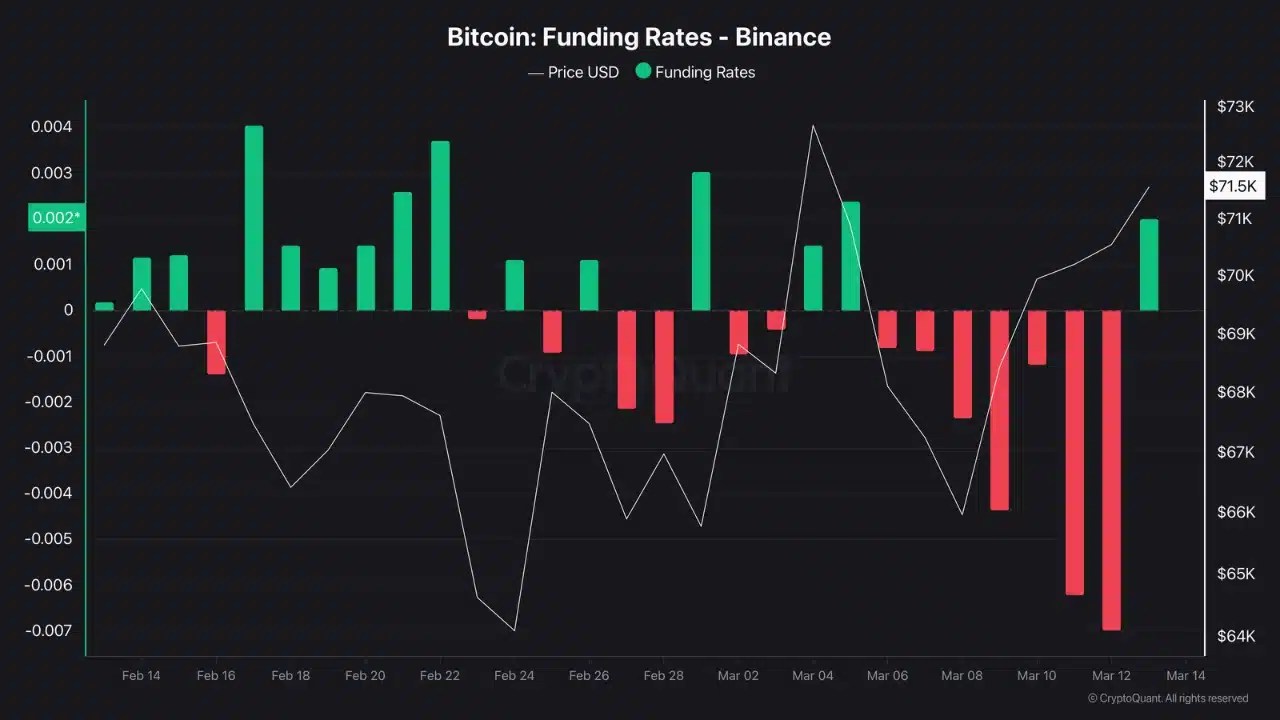
However, investors remain skeptical of the likelihood of a market recovery, according to analyst Darkfost. The funding rate has been negative for most of March. Each price rebound, including the latest one to $73.9K, has faced significant selling pressure too.
The negative funding rates reached extremes on 10-11 March, highlighting that the majority of the market had a bearish bias.
Impact of mid-term elections on Bitcoin


That’s not all either as according to Binance Research, 2026 could be a difficult year for the markets. They wrote,
In midterm election years, political uncertainty has historically resulted in average peak-to-trough S&P 500 drawdowns of approximately 16%, making it the weakest year in the four-year presidential cycle.
This affects Bitcoin too. Since 2014, the average annual BTC returns in mid-term election years have been -56%. If that trend comes true this year, expect Bitcoin to fall to $39K by the end of the year.
The report also underlined the post-election year opportunity. BTC has noted an average yearly gain of 54% in the three post-election years on record.
Final Summary
- Current market sentiment is deeply pessimistic, with each wave of short-term bullish strength being met with considerable selling pressure.
- 2026 could see a much deeper price drop, if historical trends are maintained, but would still present investors with an opportunity next year.
Source: https://ambcrypto.com/assessing-how-the-midterm-election-cycle-may-shape-bitcoins-volatile-year/