Prediction markets have fast repriced Fed rate cut expectations as inflation fears intensify following the escalating U.S.-Iran conflict. Rising oil prices have pushed energy costs higher, lifting inflation expectations and driving Treasury yields upward. Investors have reacted swiftly as geopolitical tensions threaten supply routes, raising concerns that higher prices could delay the Federal Reserve easing.
Fed Rate Cut Bets Slide as Inflation Expectations Climb
Fed Rate Cut probabilities have changed fast, according to Kalshi data. Traders now assign roughly 25% odds to one Fed rate cut, about 23% to two cuts, and nearly 19% to three cuts. Notably, expectations for two or more cuts dropped to 57%, down from 79% earlier.
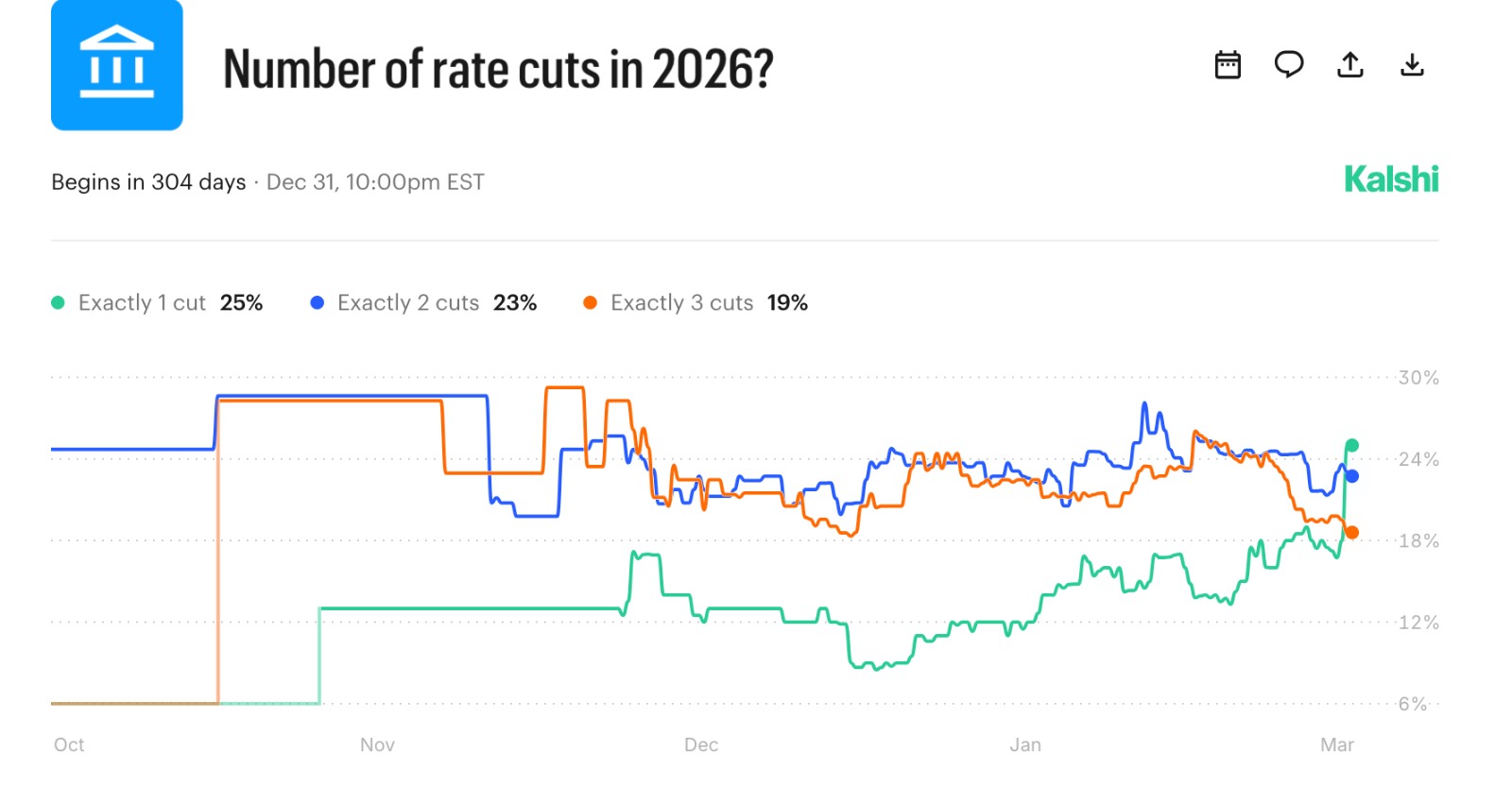
 Source: Kalshi
At the same time, five-year inflation expectations climbed to 2.54%. Meanwhile, the 10-year Treasury yield rose to about 4.1%. These moves show growing concern that higher energy prices may sustain inflation pressures.
The U.S.-Iran conflict continues to influence commodity markets and monetary policy expectations. The repricing followed a surge in crude oil prices after Iran moved to close the Strait of Hormuz.
Oil reached a two-year high, increasing costs across global markets. A prolonged disruption in oil flows could sustain elevated fuel costs. That scenario may challenge assumptions of near-term easing.
As a result, investors have reduced Fed rate cut bets. Higher energy prices often feed into transportation and consumer goods costs. Markets now anticipate a more cautious stance from policymakers.
Fed Official Outlines Policy Path Amid Uncertainty
Federal Reserve Bank of New York President John Williams addressed economic conditions. He said additional Fed rate cuts would be warranted if inflation slows after tariff effects pass. However, he emphasized that inflation remains above the Federal Reserve’s 2% target.
On the labor market, Williams described conditions as a low-hire, low-fire environment. He said the unemployment rate was at 4.3%, returning to levels seen in mid-2025. While job growth stabilized, he acknowledged rising long-term unemployment and softer survey readings.
Williams estimated Trump tariffs added roughly half to three-quarters of a percentage point to inflation. He expects inflation to ease later this year as those effects fade. He said,
If inflation follows the path I expect, further reductions in the federal funds rate will eventually be warranted
Top Voices on Inflation and Rates
Meanwhile, Federal Reserve Bank of Kansas City President Jeff Schmid stressed caution during remarks in Denver, Colorado. He noted inflation has exceeded the central bank’s objective for nearly five years. “I don’t think we have room to be complacent,” Schmid said.
Their comments come as the Federal Open Market Committee previously lowered rates by 1.75 percentage points. Officials now balance labor market stability with persistent price pressures. Therefore, Fed rate cut expectations hinge on incoming inflation data.
However, some market voices hold a different view. Arthur Hayes stated that extended geopolitical conflict historically increases the likelihood of Fed rate cuts. He argued that the Fed has cut rates during major global tensions.
Source: https://coingape.com/fed-rate-cut-odds-drop-as-inflation-fears-rise-due-to-u-s-iran-conflict/