MicroStrategy (MSTR) and BitMine Immersion Technologies (BMNR) are rewriting the 2026 crypto cycle by acting as massive corporate accumulation vehicles that now control more than 5% of the combined Bitcoin and Ethereum supply.

Instead of relying on retail speculation, MSTR uses leverage to continuously buy Bitcoin while BMNR builds a similarly aggressive Ethereum treasury, removing liquid supply from the market and turning crypto into a balance-sheet-driven financial system.
As MSTR compounds Bitcoin per share through debt-financed buying and BMNR targets 5% of Ethereum issuance through staking and institutional infrastructure, price action increasingly reflects MSTR and BMNR treasury demand rather than trader sentiment, creating faster, more sustained, and structurally different market cycles.
MSTR and BMNR are replacing retail traders as crypto’s primary market force
MSTR and BMNR now dominate Bitcoin and Ethereum because institutional trading exceeds 82% of total crypto volume, overwhelming retail activity. This means MSTR and BMNR balance-sheet flows now determine market direction.
On major exchanges such as Coinbase, institutional flows account for more than four-fifths of all trades, which means that large treasury orders now set liquidity, volatility, and price discovery. Retail traders still provide noise and short-term movement, but they no longer decide trend direction.
This structural shift explains why Bitcoin trading around $88,000–$90,000 and Ethereum near $2,900–$3,000 behaves more like a corporate capital market than a speculative casino. In 2026, MSTR and BMNR have turned crypto into a balance-sheet-driven financial system.
MSTR is turning Bitcoin into a leveraged macro asset
MSTR converts fiat debt and equity into Bitcoin, turning BTC into a leveraged macro hedge against currency debasement.
As of January 25, 2026, MicroStrategy holds 712,647 BTC, acquired for $54.19 billion at an average price of $76,037 per BTC. Its most recent purchase on January 26 added 2,932 BTC for $264.1 million, funded almost entirely through new share issuance.
Because MSTR finances Bitcoin with stock and preferred shares rather than operating profits, its equity behaves as a high-beta Bitcoin proxy. Since 2020, MSTR stock has gained over 2,300%, compared with Bitcoin’s roughly 900%, showing how leverage magnifies both upside and risk.
BMNR is turning Ethereum into a yield-generating treasury
BMNR converts Ethereum into a cash-producing asset by staking and operating validator infrastructure at institutional scale.
BitMine Immersion Technologies now holds 4,243,338 ETH, giving it control of roughly 3.52% of Ethereum’s circulating supply, valued at about $12.3 billion. In just the week ending January 26, the company added more than 40,000 ETH, continuing a multi-month accumulation campaign.
More than 2,009,267 ETH is already staked, which at a composite staking rate of ~2.8% can generate around $374 million per year, or over $1 million per day. This transforms Ethereum from a passive holding into a digital income-producing bond.
Two whales, two narratives: Bitcoin as scarcity vs Ethereum as productivity
How MSTR reinforces Bitcoin as digital gold
MSTR reinforces Bitcoin’s digital-gold narrative by treating BTC as a permanent corporate reserve rather than a tradable asset.
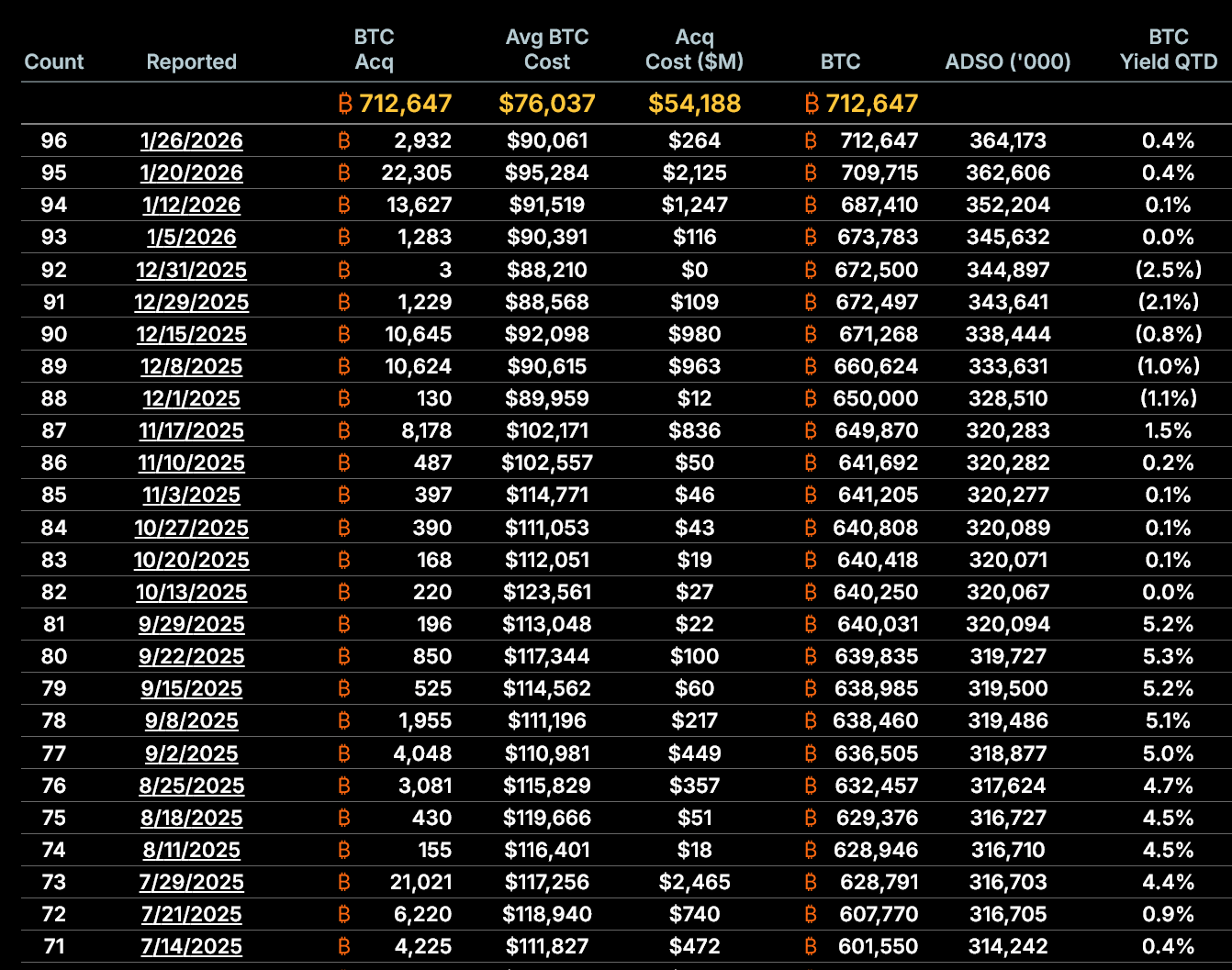
By continuously converting cash, equity, and debt into Bitcoin, Michael Saylor signals to markets that BTC is a superior store of value with a fixed 21 million coin supply. This makes Bitcoin behave more like gold than a technology stock.
Because MSTR refuses to hedge or trade its BTC, it creates a visible institutional standard for long-term holding, anchoring Bitcoin’s role as a macro hedge against fiat debasement and inflation.
How BMNR reframes Ethereum as financial infrastructure
BMNR frames Ethereum as institutional financial infrastructure through staking, validators, and tokenization strategy.
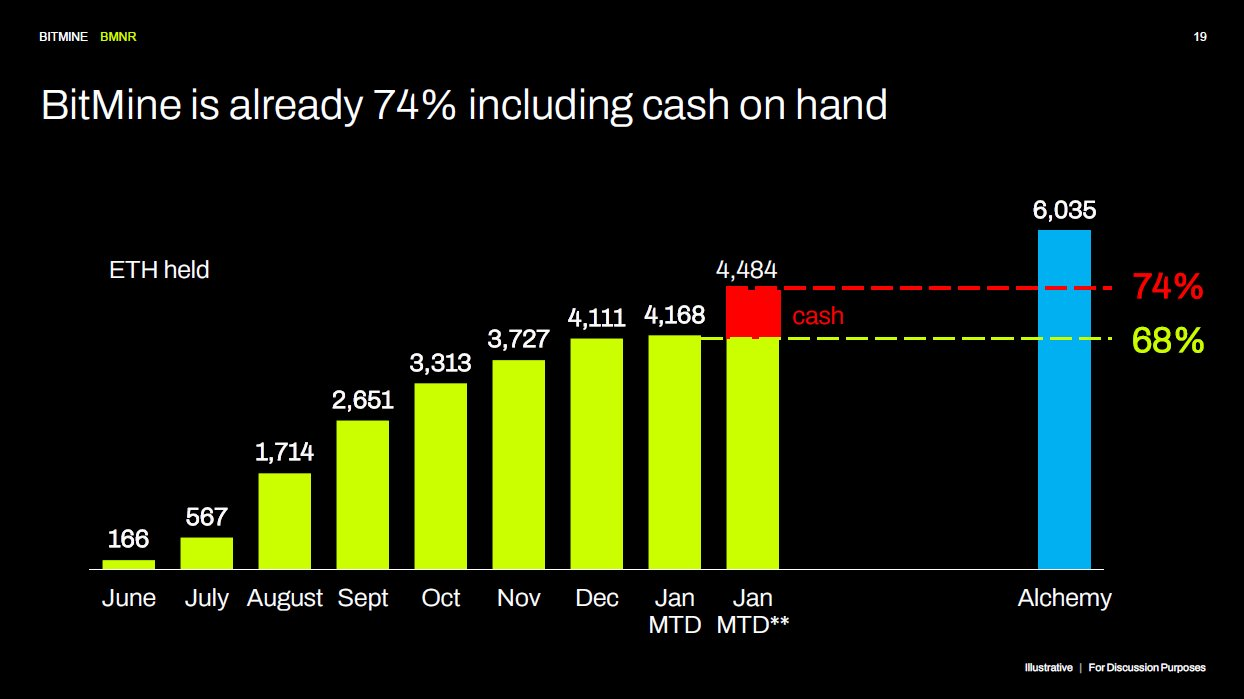
The company is launching the Made in America Validator Network (MAVAN) in early 2026, allowing it to internalize staking operations and provide secure, compliant infrastructure for Ethereum at scale.
By targeting 5% of ETH supply under its “Alchemy of 5%” plan, BMNR is also reducing liquid ETH in circulation, lowering sell pressure and enhancing Ethereum’s suitability as global financial settlement infrastructure.
Is corporate hoarding creating the next bull cycle or the next leverage trap?
How balance-sheet leverage can amplify both rallies and crashes
MSTR and BMNR use mNAV premiums, equity issuance, and convertible debt, which magnifies gains in bull markets and losses in downturns. This makes MSTR and BMNR stocks more volatile than BTC or ETH.
MicroStrategy’s most important metric is its multiple to net asset value (mNAV). As of January 26, its mNAV fell to 0.94×, meaning the stock traded at a 6% discount to the Bitcoin backing each share.
When mNAV is below 1, issuing new shares becomes destructive dilution, reducing Bitcoin per share instead of increasing it. From January 5 to January 26, diluted shares rose 5.36%, while BTC holdings grew only 5.77%, showing that accretion is nearly gone.
Why regulation and execution decide whether this becomes a new financial era
The next 12–24 months will decide whether corporate crypto treasuries become global standards or collapse under regulatory and leverage pressure.
The CLARITY Act and the move toward fair-value accounting are critical. If companies can report crypto gains like traditional assets, Fortune 500 firms could allocate over $1 trillion into Bitcoin and Ethereum.
If regulation tightens or a 2026 crash forces MSTR vs BMNR to sell assets to service debt, the institutional crypto thesis could unravel.
| DISCLAIMER: The information on this website is provided as general market commentary and does not constitute investment advice. We encourage you to do your own research before investing. |
Source: https://coincu.com/analysis/deep-analysis/how-mstr-and-bmnr-the-next-cycle/